Revocable vs. Irrevocable Trusts in Georgia

What Happened
A Georgia estate planning law firm published a detailed comparison of revocable and irrevocable trusts for Georgia families. The article, published in November 2026 by Georgia Wills, Trusts, and Probate Firm, frames the core question not as a contest between two trust labels but as a goals-first decision. The firm's central argument: most Georgia families benefit from a revocable trust, while an irrevocable trust serves a narrower set of planning objectives that require giving up control over assets.
The article addresses a common misconception that irrevocable trusts are inherently superior because they sound more protective. The firm pushes back on that framing directly, noting that irrevocable trusts add restriction without adding value unless a specific planning problem requires separating the creator from the asset. The piece also flags the Medicaid and long-term care dimension as one of the most misunderstood areas, warning that families sometimes assume irrevocable automatically means Medicaid-safe, which is not accurate under Georgia rules.
The publication reflects a broader trend among Georgia estate planning practitioners: moving away from product-first conversations toward goal-first planning. Rather than asking which trust sounds stronger, the firm encourages families to identify whether they need flexibility or separation, probate planning or protection planning, and whether long-term care is part of the conversation at all. That framing gives families a clearer decision-making process than comparing trust definitions in isolation.
What It Means
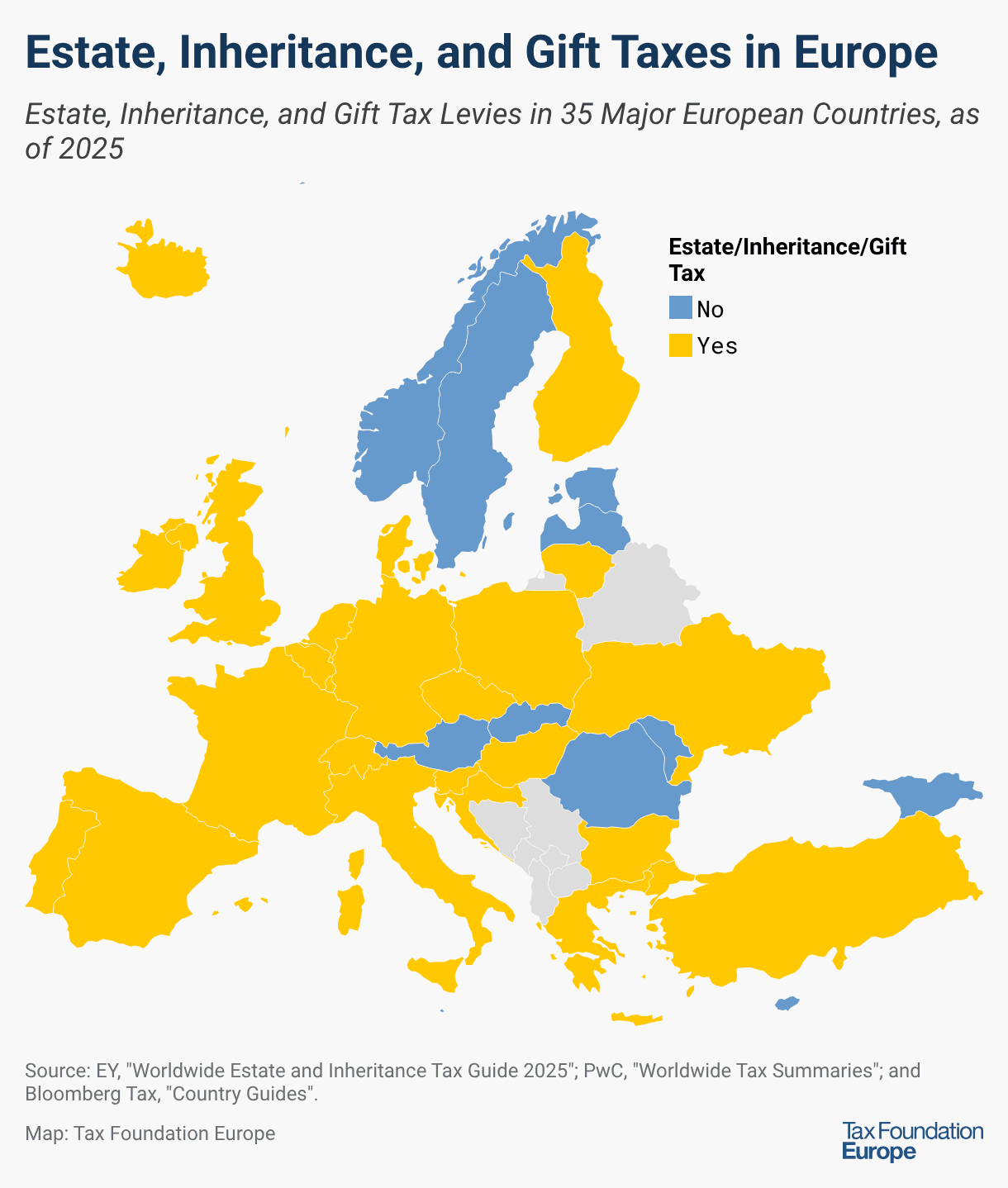
For Georgia families weighing trust options, the practical stakes are significant. Georgia does not impose a state estate or inheritance tax, which removes one common driver of irrevocable trust planning from the equation for most residents. Georgia imposes no state estate or inheritance tax, meaning the federal exemption of $15,000,00026 USC 2001(c), 2010; P.L. 119-21 §70106Verified Sep 15, 2026View source per individual governs exposure for most families. That reality narrows the field of situations where an irrevocable trust delivers a tax-specific advantage that a revocable trust cannot match.
The probate avoidance argument for revocable trusts carries real weight in Georgia. A typical Georgia probate proceeding runs 9 months to 12 months, with a court filing fee of $175O.C.G.A. § 15-9-60(e)(1) (2024 Ga. L. Act 515 / SB 232, eff. 1/1/2025)Verified Oct 17, 2026View source plus county add-ons that bring opening petition totals to roughly $200 to $209 in most counties. Attorney fees in Georgia run 2.1%Modeled estimate under O.C.G.A. § 53-7-6(4) (petition to the probate court for a judgment fixing the attorney's fees and expenses; no statutory percentage): the hours the statutory fee schedules imply, at the state's surveyed hourly rateVerified Sep 8, 2026View source to 3.4% of the estate, which translates to approximately $38,748O.C.G.A. § 53-7-6(4) (petition to the probate court for a judgment fixing the attorney's fees and expenses; no statutory percentage)Verified Sep 8, 2026View source on a $500,000 estate when executor commissions and other costs are included. A properly funded revocable trust sidesteps that process entirely, keeping the estate private and out of court. Our Georgia probate cost calculator estimates the full cost for your specific estate size.
Georgia does allow independent administration, which can reduce court supervision during probate for estates that do go through the process. But the creditor claim window still runs 3 monthsO.C.G.A. § 53-7-41(d) ("within three months from the date of publication of the personal representative's last notice")Verified Sep 8, 2026View source from the last publication of notice, and the personal representative must publish notice in the county's official legal organ for 4O.C.G.A. §§ 53-7-40, 53-7-41, 53-7-42, 53-7-43, 9-3-36Verified Oct 18, 2026View source weeks. That timeline alone creates delays that a funded revocable trust avoids. On the intestate track, Georgia requires a surety bond from the personal representative, though all heirs can unanimously waive it. A revocable trust with a named successor trustee eliminates that requirement entirely by keeping asset management outside the probate process.
The incapacity planning dimension deserves equal attention. A revocable trust allows a named successor trustee to step in and manage assets without court involvement if the grantor becomes incapacitated. Georgia's financial power of attorney framework provides a parallel protection for assets held outside the trust. A Georgia financial power of attorney requires notarization and 1O.C.G.A. §§ 10-6B-1 through 10-6B-81Verified Oct 21, 2026View source witness. Georgia financial powers of attorney are durable by default, meaning they survive the principal's incapacity. Together, a funded revocable trust and a durable financial power of attorney create a comprehensive incapacity plan that avoids the cost and delay of guardianship or conservatorship proceedings.
Georgia's small estate procedures offer a narrow alternative for very modest estates. The Bank Deposit AffidavitO.C.G.A. § 7-1-239Verified Sep 8, 2026View source covers bank deposits up to $15,000 with no waiting period after death. A separate "No Administration Necessary" petition exists for intestate estates with no debts and unanimous heir agreement, with no dollar threshold. But these procedures cover only limited asset types and circumstances. For families with real estate, investment accounts, or any meaningful complexity, a revocable trust remains the more complete solution. Our probate decision tool helps determine whether simplified procedures apply to a specific estate.
Context from SimplyTrust
SimplyTrust creates Nevada revocable living trusts that Georgia residents can use regardless of where they live. The platform handles the most common planning goals the Georgia firm describes: probate avoidance, incapacity planning, coordinated asset distribution, and named successor trustee management. SimplyTrust's trust documents include a spendthrift clause that restricts creditor access to trust assets before distribution, a no-contest clause that discourages frivolous challenges, and built-in provisions for supplemental needs planning. Free supporting documents, including a Georgia healthcare proxy, financial power of attorney, and pour-over will, round out the incapacity and probate-avoidance picture. For families whose planning goals fall within the revocable trust framework, the platform provides a complete starting point without attorney fees that can run $2,980Estimate: 10 hours at $298, Clio's Georgia Trusts rate; Compare Lawyer Rates, 2025 dataVerified Oct 15, 2026View source to $4,470Estimate: 15 hours at $298, Clio's Georgia Trusts rate; Compare Lawyer Rates, 2025 dataVerified Oct 15, 2026View source in Georgia.
Families with goals that require an irrevocable trust, including Medicaid planning, life insurance trust structures, or advanced asset protection strategies, fall outside what any revocable trust platform handles. The Georgia firm's core point applies here as well: the decision starts with goals, not labels. SimplyTrust is not a law firm and does not provide legal advice. Families navigating Medicaid eligibility, long-term care timing, or complex creditor protection needs benefit from working directly with a licensed Georgia estate planning attorney. For the large majority of Georgia families whose goals center on probate avoidance, incapacity planning, and organized asset distribution, a revocable trust addresses the actual problem. Our guide to revocable versus irrevocable trusts covers the structural differences in plain language.