When to Review Your Georgia Estate Plan

What Happened
A Georgia estate planning firm published a detailed guide on September 10, 2026, explaining when Georgia residents need to review their estate plans and what the consequences of outdated documents look like in practice. The article, written by Georgia Wills, Trusts and Probate Firm, LLC, identifies four primary triggers that signal an estate plan needs attention: major life events, changes in fiduciaries, significant shifts in asset values, and updates to Georgia or federal law.
The guide draws attention to a common misconception — that creating an estate plan is a one-time task. Most people draft documents at a major milestone and assume the work is finished. The firm argues that an estate plan is a living set of documents, and that a plan written at 40 may not serve a family well at 55. The article specifically calls out divorce as a particularly dangerous trigger in Georgia, noting that divorce does not automatically revoke a will under state law, meaning provisions in favor of a former spouse can survive unless the document is actively updated.
The firm also addresses what a review actually involves, emphasizing that a review does not always mean a full redraft. In many cases, an attorney confirms the plan remains appropriate. In others, one or two provisions need updating. The article recommends reviewing an estate plan every three to five years as a baseline, with more frequent reviews after triggering events. The cost of a periodic review, the firm notes, is minor compared to the cost of a probate dispute or court proceeding that an outdated plan can generate.
What It Means for Georgia Families
Georgia's estate planning laws carry several characteristics that make regular plan reviews particularly important for residents. On the will execution side, Georgia permits individuals as young as 14 yearsO.C.G.A. § 53-4-20Verified Sep 15, 2026View source to create a will — an unusually low threshold compared to most states. A will signed at a young age, without subsequent review, may not reflect the realities of adult life, family formation, or accumulated assets. Georgia does not recognize holographic wills, meaning handwritten, unwitnessed documents carry no weight under state law. A will must meet formal execution standards, including 2O.C.G.A. § 53-4-20Verified Sep 15, 2026View source witnesses, to be recognized. Families who rely on informal documents risk having no plan at all.
The article's warning about divorce deserves particular attention in Georgia. Unlike the 37 states that automatically revoke beneficiary designations to a former spouse upon divorce, Georgia does not extend that automatic revocation to wills. A surviving former spouse named in an unrevised will may retain inheritance rights that the deceased never intended to preserve. This gap makes post-divorce estate plan review not just advisable but functionally necessary for anyone who wants their assets to pass as intended. Georgia also has no elective share statute — a protection available to surviving spouses in most other states — which means the interplay between blended family dynamics and an outdated will can produce outcomes that no one anticipated.
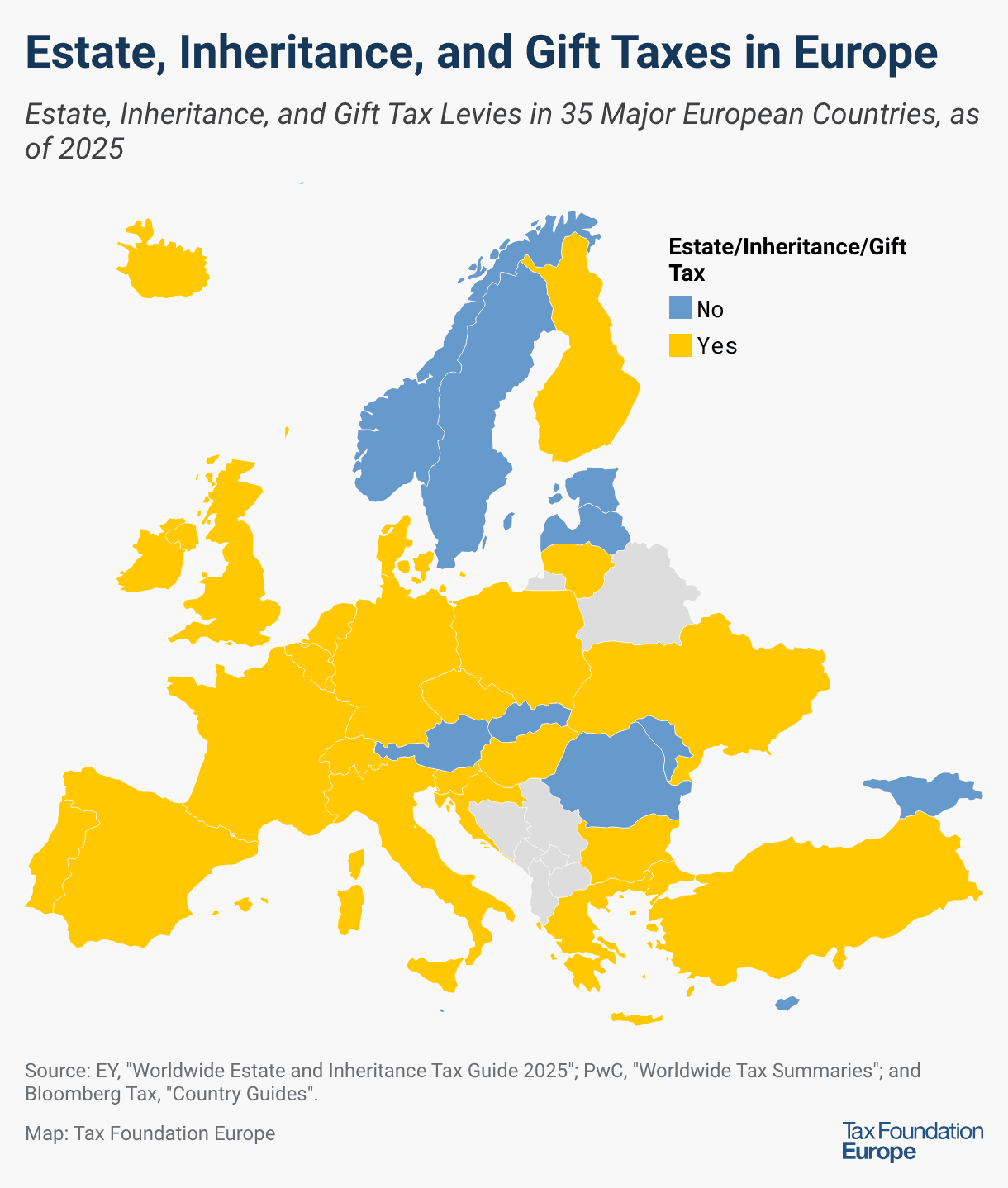
On the financial side, Georgia imposes no state estate or inheritance tax, which simplifies planning compared to the 12 states that impose their own death taxes. However, the federal estate tax remains relevant for larger estates. The current federal estate tax exemption stands at $15,000,00026 USC 2001(c), 2010; P.L. 119-21 §70106Verified Sep 15, 2026View source per individual, or $30,000,00026 USC 2001(c), 2010; P.L. 119-21 §70106Verified Sep 15, 2026View source for married couples using portability. Plans written under earlier, lower exemption thresholds may have included tax-driven structures — credit shelter trusts, bypass trusts, or specific allocation formulas — that now operate differently or unnecessarily restrict a surviving spouse's access to assets. Reviewing those provisions against the current exemption amount prevents unintended consequences. If the federal exemption decreases in future legislation, the reverse problem emerges: plans written under today's higher exemptions may expose estates to tax liability that earlier planning did not anticipate.
Georgia's probate process adds another layer of urgency to plan maintenance. Estates that pass through probate in Georgia face a typical timeline of 9 months to 12 months, with attorney fees typically ranging from 2.1%O.C.G.A. § 53-7-6(4) (PR authorized "to provide competent legal counsel for the estate...either the personal representative or the attorney employed may, by petition to the probate court...obtain a judgment fixing the attorney's fees and expenses"; no statutory percentage) (Verified 2026-09-08 against GA Code § 53-7-6 (2025))Verified Sep 8, 2026View source to 3.4%O.C.G.A. § 53-7-6(4) (PR authorized "to provide competent legal counsel for the estate...either the personal representative or the attorney employed may, by petition to the probate court...obtain a judgment fixing the attorney's fees and expenses"; no statutory percentage) (Verified 2026-09-08 against GA Code § 53-7-6 (2025))Verified Sep 8, 2026View source of the estate. Court filing fees begin at $175O.C.G.A. § 15-9-60(e)(1) (2024 Ga. L. Act 515 / SB 232, eff. 1/1/2025)Verified Sep 8, 2026. Georgia requires a surety bond for personal representatives in intestate estates, though heirs can waive this requirement by unanimous consent. An outdated plan that names a deceased or unavailable executor forces the probate court to appoint a replacement — a process that adds time, cost, and uncertainty to an already difficult period. Creditors in Georgia have 3 monthsO.C.G.A. § 53-7-41(d) ("within three months from the date of publication of the personal representative's last notice") (Verified 2026-09-08 against GA Code § 53-7-41 (2025))Verified Sep 8, 2026View source from the date of the last published notice to file claims against an estate, and that window runs regardless of whether the family is ready to administer the estate efficiently. A detailed breakdown of Georgia probate costs illustrates how quickly these expenses accumulate.
The article's focus on fiduciary review resonates with a practical reality that estate planning professionals consistently observe. The person best suited to serve as executor or trustee at one stage of life may not be the right choice a decade later. Georgia's financial power of attorney framework, adopted under the Uniform Power of Attorney Act, requires 1O.C.G.A. §§ 10-6B-1 through 10-6B-81Verified Sep 18, 2026View source witness and notarization. Georgia permits springing powers of attorney that activate only upon incapacity. A principal whose named agent has died or become incapacitated may find themselves without a functioning power of attorney at precisely the moment they need one most. Reviewing and updating agent designations is one of the highest-impact, lowest-cost actions a Georgia resident can take. For a broader look at how these documents work together, the Glossary of Basic Estate Planning Terms provides accessible definitions of key roles and documents.
Context from SimplyTrust
The core insight from the source article — that estate plans require ongoing maintenance, not just initial creation — aligns with how SimplyTrust approaches trust management. A trust that sits unchanged for years while life evolves carries the same risks as any other outdated document. SimplyTrust's platform allows grantors to update their revocable living trust as circumstances change, without the friction of scheduling attorney appointments for routine amendments. Understanding the many reasons a trust may need updating helps families stay proactive rather than reactive. For Georgia families evaluating whether their current approach to estate planning serves them well, the comparison between trust-based planning and probate provides useful context for understanding what a funded trust accomplishes that a will alone cannot.
Estimating what probate actually costs in Georgia can help families understand the financial stakes of keeping — or failing to keep — an estate plan current. Use the calculator below to see state-specific probate cost estimates based on estate size.