POD Accounts in Maryland: Helpful Tool or Hidden Trap?

What Happened
A Maryland estate planning law firm published a detailed analysis in October 2026 examining payable-on-death accounts, a widely used probate-avoidance tool that many families treat as a complete estate plan. The article, written by attorney Melissa Paddy of Liberty Legacy Law Group, argues that POD accounts carry significant hidden risks when families rely on them too heavily or fail to coordinate them with a broader plan.
The piece walks through how POD accounts function during a person's lifetime and at death. During the account owner's life, the named beneficiary holds no access to the funds and no legal claim against them. At death, the account transfers directly to the named beneficiary outside of probate, bypassing any instructions in a will or trust entirely. This bypass effect is the central feature the article warns families to understand before assuming POD designations align with their overall estate planning intentions.
The analysis identifies several scenarios where POD accounts create unintended outcomes: when beneficiary designations go years without updates after major life changes, when minor children are named as direct recipients, when multiple heirs exist and only one account beneficiary is listed, and when the account operates in isolation from the rest of an estate plan. The firm concludes that POD accounts work best as a coordinated component of a larger plan rather than as a standalone probate-avoidance strategy.
What It Means
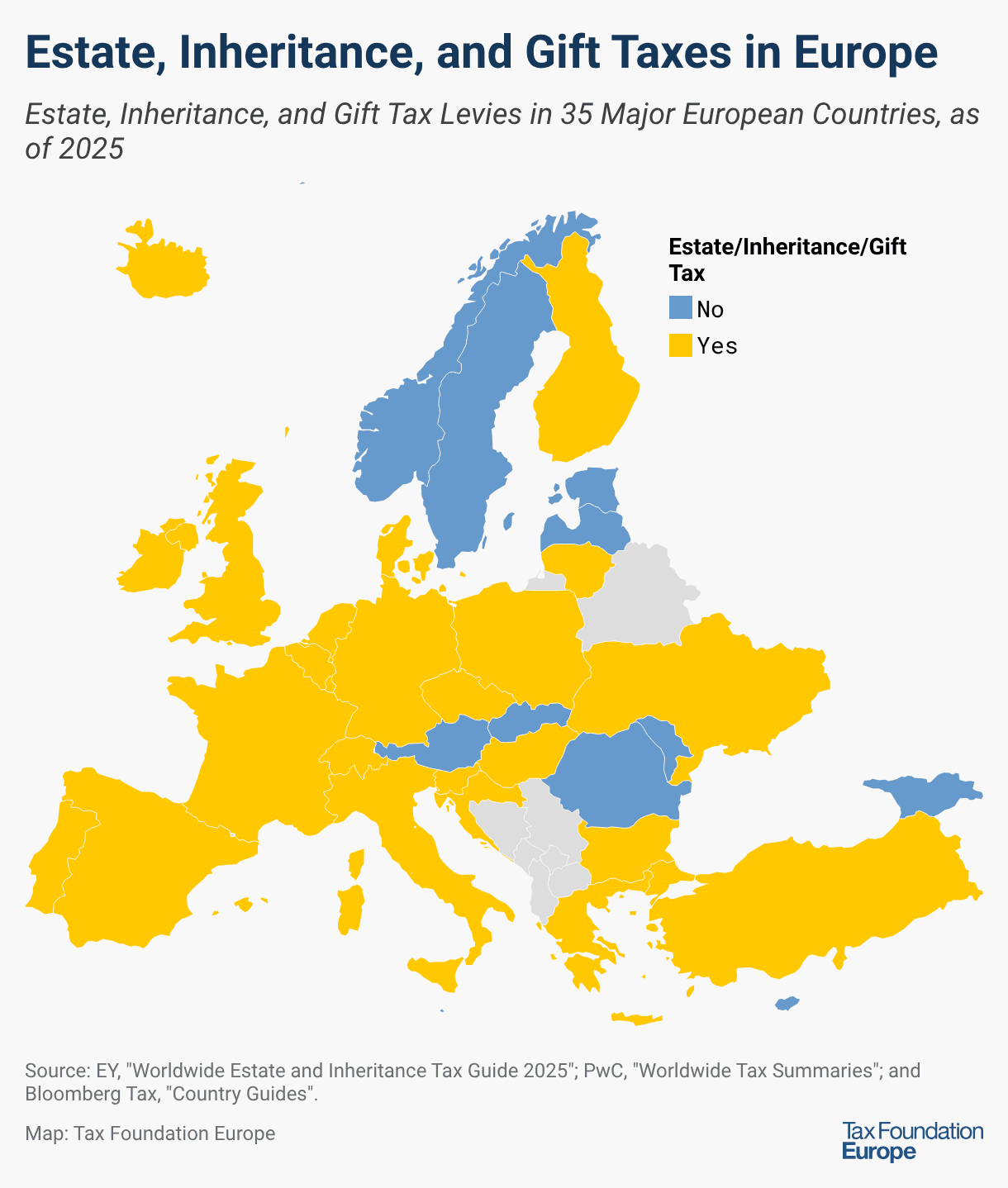
For Maryland families, the stakes around POD account coordination are particularly significant because Maryland sits in a complex tax and probate environment. Maryland is one of only a small number of states that imposes both a state estate tax and a state inheritance tax. Maryland's estate tax applies to estates where the federal gross estate plus lifetime taxable gifts plus Maryland QTIP property reaches $5,000,000Md. Tax-Gen. § 7-309Verified Sep 15, 2026View source or more, with a top rate of 16%Md. Tax-Gen. § 7-309Verified Sep 15, 2026View source. The state also collects an inheritance tax at 10%Md. Tax-Gen. §§ 7-202, 7-203, 7-204Verified Sep 15, 2026View source of the clear value transferred to anyone outside a narrow class of exempt relatives. POD accounts that pass funds to non-exempt recipients — such as nieces, nephews, friends, or unmarried partners who have not registered as domestic partners — trigger that 10%Md. Tax-Gen. §§ 7-202, 7-203, 7-204Verified Sep 15, 2026View source tax on transfers above $1,000Md. Tax-Gen. §§ 7-202, 7-203, 7-204Verified Sep 15, 2026View source. Families who set up POD designations without understanding Maryland's inheritance tax exposure may inadvertently create a tax bill for the very beneficiary they intended to help.
The probate context matters too. Maryland probate typically runs 9 months to 12 months for a standard estate. Attorney fees run approximately 2.1%Md. Est. & Trusts § 7-602 (reasonable compensation; no statutory percentage)Verified Sep 8, 2026View source to 3.3%Md. Est. & Trusts § 7-602 (reasonable compensation; no statutory percentage)Verified Sep 8, 2026View source of the estate value, and Maryland requires a surety bond for the personal representative, though the will can waive this requirement. On a $500,000 estate, combined attorney fees and executor commissions can reach $33,231Md. Est. & Trusts § 7-602 (reasonable compensation; no statutory percentage)Verified Sep 8, 2026View source or more. That cost pressure explains why Maryland families reach for probate-avoidance tools like POD accounts. But the article's core warning holds: avoiding probate on one account does not protect the rest of the estate, and a poorly coordinated POD designation can create family conflict, unequal distributions, and tax complications that cost more than probate itself. For a deeper look at how probate costs stack up, the SimplyTrust guide to probate breaks down the process in plain language.
The minor beneficiary problem the article raises carries a specific legal dimension in Maryland. A minor cannot legally receive funds directly. If a parent names a child under 18 as a POD beneficiary, the bank cannot simply hand over the funds at the parent's death. A court proceeding becomes necessary to appoint a custodian or guardian of the property, which can freeze access to those funds for months. Maryland's Uniform Transfers to Minors Act sets the custodial age at 21 yearsET §§ 13-301, 13-320Verified Sep 15, 2026View source, meaning assets held under that framework remain managed until the beneficiary reaches that age. Families who want to leave funds for children with built-in management and age-triggered distributions generally find that a funded revocable trust provides more control than a POD designation. Maryland is a separate property state, so each spouse owns their own accounts independently — making intentional beneficiary coordination even more important for married couples who assume joint accounts cover everything. The SimplyTrust article on estate planning for grandchildren explores how structured distributions protect younger beneficiaries more effectively than outright transfers.
Context from SimplyTrust
Payable-on-death accounts represent one piece of a complete estate plan, and the coordination problem the article describes is exactly why trust funding matters. A revocable living trust holds assets under unified terms, allowing the grantor to set distribution conditions, name successor trustees, and ensure every account works toward the same outcome. Assets that sit outside a trust — in individual accounts with outdated or uncoordinated POD designations — can undercut an otherwise careful plan. The SimplyTrust article on why trust funding is vital explains the mechanics of connecting accounts to a trust and why the blanket assignment approach addresses the coordination gap that POD accounts leave open.
For Maryland families weighing whether POD accounts, beneficiary designations, or a funded trust best serve their goals, the SimplyTrust breakdown of estate tax versus inheritance tax provides a useful starting point for understanding how Maryland's dual tax structure affects the choice of transfer method. Understanding which beneficiaries face Maryland's 10%Md. Tax-Gen. §§ 7-202, 7-203, 7-204Verified Sep 15, 2026View source inheritance tax — and which fall within the exempt family class — often changes how families structure account designations entirely. A coordinated plan accounts for all of these variables at once rather than optimizing each account in isolation.
Source: Payable-on-Death Accounts: Helpful Tool or Hidden Trap?