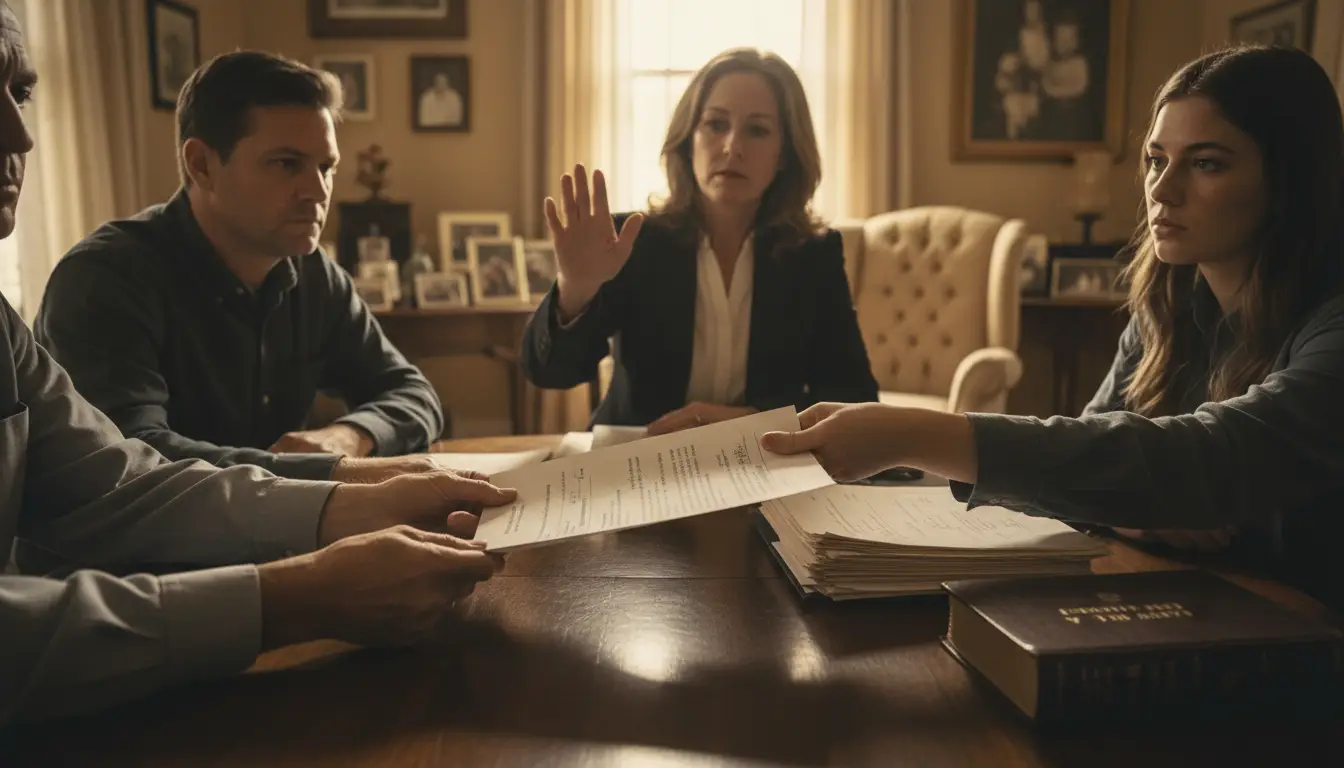
Four people review documents at a wooden table in a formal living room with framed photos and furniture in the background

Why Trial Lawyers Are Essential in Estate Disputes

SimplyTrustSimplyTrust Editorial···2 min read

Discover why trial lawyers are vital in settling estate disputes.

Have you ever wondered why some estate disputes seem to drag on until the very last minute before settling? It’s a common scenario, especially in California, where up to 98% of legal disputes resolve before reaching a courtroom. Yet, this statistic actually highlights the critical role of trial lawyers in the estate planning process. Their expertise and readiness to litigate can often make all the difference in negotiations.

Imagine this: you’re facing a dispute over a will or trust, perhaps involving allegations of fiduciary misconduct or undue influence. Your opponent may be counting on you to fold before trial, but having a seasoned trial attorney on your side changes the dynamics. Their deep understanding of probate law, especially in counties like San Diego and Orange, can encourage a more favorable settlement simply because the other side knows you’re prepared to go to trial if necessary.

Judges in these areas are known for their proactive oversight and substantial knowledge of probate issues. This means they can steer disputes toward resolution and help parties reach an agreement, but only if they believe the parties are well-prepared. This is where the trial lawyer shines. Their ability to present a case compellingly ensures that the stakes are high enough for all parties to consider settlement rather than risk an unfavorable ruling.

Moreover, the presence of a trial attorney can foster an environment of accountability. When both sides know that a lawyer is prepared to step into the courtroom, they may be more inclined to negotiate in good faith. The pressure of potential judicial scrutiny often leads to last-minute settlements, especially when major issues are at stake. This is why having a trial lawyer on your team can be considered an investment in peace of mind during the estate planning process.

In conclusion, while most cases settle, the presence of a trial lawyer is invaluable. If you find yourself in a dispute over an estate or trust, ensure you have someone on your side who not only knows the law but is also prepared to fight for your interests in court. After all, being prepared is half the battle in estate planning disputes.


Read the original article →

California Estate Law GuideProbate costs, will requirements, trust rules, and intestate succession.

Forms for Settling an Estate

Free forms for settling an estate: probate petition, small estate affidavit, creditor notice and closing forms. Prepare each form for your state.

Free

Estate Settlement Kit

The probate petition, the EIN application or your pick from 11 forms, with the estate's facts asked once.

Get Started
Free

Petition for Probate and Letters

Open probate and ask the court to appoint you and issue Letters Testamentary or Letters of Administration.

Get Started
Free

Notice to Creditors

Notify estate creditors and start the claim period — the published notice plus mailed copies for known creditors.

Get Started
Free

Renunciation of Executor

Decline an appointment as executor named in a will — the writing filed with the court before anyone is appointed.

Get Started
Free

Affidavit of Heirship

Prepare the sworn statement of a deceased person's family history and heirs for recording in the county land records, with your state's recording instructions.

Get Started
Free

Small Estate Affidavit

Collect a small estate's property without probate — the sworn affidavit presented to banks and other holders, with a presentation letter for each.

Get Started
Free

Estate Inventory

Prepare the probate inventory of estate property — every asset at its date-of-death value, composed to your state's statute, with the state's filing or delivery instructions.

Get Started
Free

Estate Closing

Prepare the paperwork that closes the estate — the state's closing statement, petition for discharge, or final account, with the state's closing instructions and the optional federal forms.

Get Started

All forms

Tools for Settling an Estate

Free tools for settling an estate: whether probate is needed, executor and trustee pay, creditor deadlines and taxes. Run each tool for your state.

How Much Can an Executor Charge?

Calculate how much an executor can charge for administering an estate.

Calculate the Fee

Can I Self-File Probate?

Whether your state lets you open probate yourself, and what it costs with a lawyer and without one.

Get the Answer

How Do I Get Letters Testamentary?

See the court that issues Letters Testamentary or Letters of Administration, the petition, the bond, and the documents to file.

See the Steps

What Are the Creditor Claim Deadlines?

Find creditor claim deadlines, notice requirements, and payment priority order for your state.

Check the Rules

What Happens When an Estate Is Insolvent?

See the order your state pays an insolvent estate's debts and which claims go unpaid.

Check the Rules

How Do I Claim a Deceased Person's Unclaimed Property?

See where to search for a deceased person's unclaimed property and what each state asks an heir or executor to send.

Check the Rules

How Do I Open an Estate Account When Someone Dies?

Compare estate-account opening requirements bank by bank: channels, required documents, and steps.

See the Steps

Hire a California Probate Attorney

Browse vetted California attorneys handling probate matters.

Browse firms

All tools