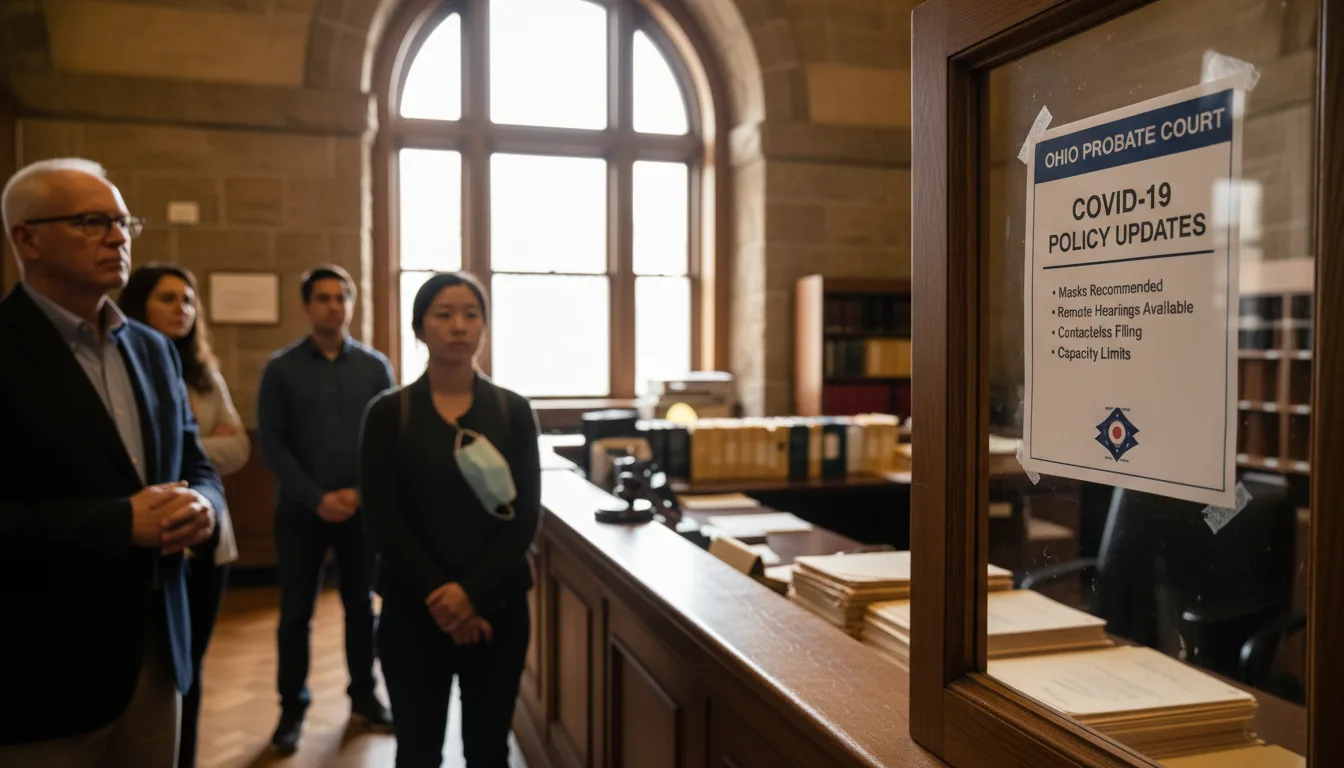
People stand in an Ohio Probate Court hallway near a posted COVID-19 policy updates sign

Ohio Probate Court Updates on COVID-19 Policies

SimplyTrustSimplyTrust Editorial··2 min read

Discover the latest updates from the Butler County Probate Court regarding COVID-19 policies and their impact on estate planning.

Is your estate planning strategy up to date with the latest court policies? Recently, the Butler County Probate Court in Ohio made some notable adjustments in response to the ongoing challenges posed by COVID-19. These updates not only impact how hearings are conducted but also how individuals might consider their estate planning needs moving forward.

The court has emphasized the importance of remote hearings, utilizing platforms like WebEx to ensure accessibility while maintaining safety protocols. This shift means that more people can engage in the probate process without the need for in-person attendance, which can be especially beneficial for those who may have health concerns or mobility issues. Think about this: if you were planning to update your will or trust, you can now do so comfortably from your home.

Additionally, the court has outlined new health and safety protocols for in-person visits. Anyone entering the courthouse is now required to undergo a health screening and wear a face covering. This creates a safer environment for both the public and court personnel, but it also means that if you’re planning to visit, you’ll need to be prepared for these protocols. Staying informed about such requirements can help avoid any last-minute surprises.

As you consider your estate planning, it’s crucial to remain aware of how these court policies may affect the execution of documents like wills and trusts. For example, if you need to sign documents in person, understanding these new rules can help streamline the process. Deadlines for certain filings might also be impacted, so keeping a close eye on updates from the court can save you from potential complications.

In light of these changes, now might be a good time to review your own estate planning documents. Are they current? Have there been significant life changes that warrant an update? Engaging with your attorney, whether virtually or in a compliant manner, can ensure that your plans accurately reflect your wishes and comply with the latest legal standards.

In conclusion, the Butler County Probate Court’s adaptations to the pandemic illustrate the evolving landscape of estate planning. Considering these developments can provide peace of mind and ensure that your estate matters are handled smoothly. Make it a priority to stay informed and proactive about your estate planning needs as we navigate these changes together.

Read the original article →

Forms for Settling an Estate

Free forms for settling an estate: the probate petition, small estate affidavit, notice to creditors, inventory, and closing forms.

Free

Petition for Probate and Letters

Open probate and ask the court to appoint you and issue Letters Testamentary or Letters of Administration.

Get Started
Free

Notice to Creditors

Notify estate creditors and start the claim period — the published notice plus mailed copies for known creditors.

Get Started
Free

Renunciation of Executor

Decline an appointment as executor named in a will — the writing filed with the court before anyone is appointed.

Get Started
Free

Affidavit of Heirship

Prepare the sworn statement of a deceased person's family history and heirs for recording in the county land records, with your state's recording instructions.

Get Started
Free

Small Estate Affidavit

Collect a small estate's property without probate — the sworn affidavit presented to banks and other holders, with a presentation letter for each.

Get Started
Free

Estate Inventory

Prepare the probate inventory of estate property — every asset at its date-of-death value, composed to your state's statute, with the state's filing or delivery instructions.

Get Started
Free

Estate Closing

Prepare the paperwork that closes the estate — the state's closing statement, petition for discharge, or final account, with the state's closing instructions and the optional federal forms.

Get Started
Free

Letter of Instruction

Prepare the letter a bank or insurer requests during estate settlement, addressed to its claims department.

Get Started

All forms

Tools for Settling an Estate

Free tools for settling an estate: whether probate is needed, executor and trustee pay, creditor deadlines, and inheritance taxes.

How Much Can an Executor Charge?

Calculate how much an executor can charge for administering an estate.

Use Calculator

Can I Self-File Probate?

Whether your state lets you open probate yourself, and what it costs with a lawyer and without one.

Check Now

How Do I Get Appointed as Executor?

See the court, petition, bond, and documents needed to be appointed and receive your Letters.

See the Steps

What Are the Creditor Claim Deadlines?

Find creditor claim deadlines, notice requirements, and payment priority order for your state.

Check Deadlines

What Happens When an Estate Is Insolvent?

See the order your state pays an insolvent estate's debts and which claims go unpaid.

Check the Payment Order

How Do I Open an Estate Account When Someone Dies?

Compare estate-account opening requirements bank by bank: channels, required documents, and steps.

See Bank Requirements

What Is the Estate's Personal Property Worth for Probate?

Estimate the fair market value of household items for probate and see how it affects fees.

Estimate Value

Hire a Probate Attorney

Browse vetted attorneys handling probate matters across all 50 states.

Browse firms

All tools