SimplyTrust
SimplyTrust
Create a TrustNewForms & ToolsFreeResourcesStates
LoginGet started
ArticlesArticlesNewsNewsLife EventsLife EventsFinancial AssetsFinancial Assets
ArticlesNewsLife EventsFinancial Assets
Company
AboutCareersContactFormsCreate a TrustNew
Privacy PolicyTerms of ServiceSecurityAI Access

© 2026 SimplyTrust Software Inc.

SimplyTrust Logo

Every family deserves a plan. We'll help.

Get startedApp StoreGoogle Play

Forms

  • Revocable Trust
  • Last Will
  • Pour-Over Will
  • Healthcare Proxy
  • Financial POA
  • Transfer on Death Deed

Tools

  • Trust vs Will
  • Probate Calculator
  • Who Inherits
  • Estate Settlement
  • Death Tax Calculator
  • Life Insurance

Learn

  • Revocable Living Trusts
  • Last Will and Testaments
  • Articles
  • State Guides
  • Estate Law
  • Life Events

Directories

  • Law Firms
  • Financial Assets
  • Digital Assets
  • Government Agencies

Company

  • About
  • Careers
  • Contact
  • Create a Trust

SimplyTrust is not a law firm and does not provide legal advice, legal counsel, or attorney review. Information on this platform is for general informational purposes only. Use of SimplyTrust does not create an attorney-client relationship. You are solely responsible for all documents you create. For advice tailored to your circumstances, consult a licensed attorney in your state.

© 2026 SimplyTrust Software Inc. All rights reserved.

Privacy Policy·Terms of Service·Security··AI Access

All content, data, and calculations are proprietary. Automated scraping, systematic downloading, or data extraction is prohibited under our Terms of Service. Product visuals are simulated for illustrative purposes and may differ from actual experience. Logos provided by Logo.dev.

A will is a wish. A trust is a plan.

Create and manage your trust online.

How it works

No probate. No public record. No court.

Estate Ledger

Every decision signed, timestamped, and hashed

Pricing

Simple, transparent pricing

Download

Get the app on iOS and Android

Home→News→Demystifying the 2025 Tax Debate: Impact on Estate and Gift Taxes
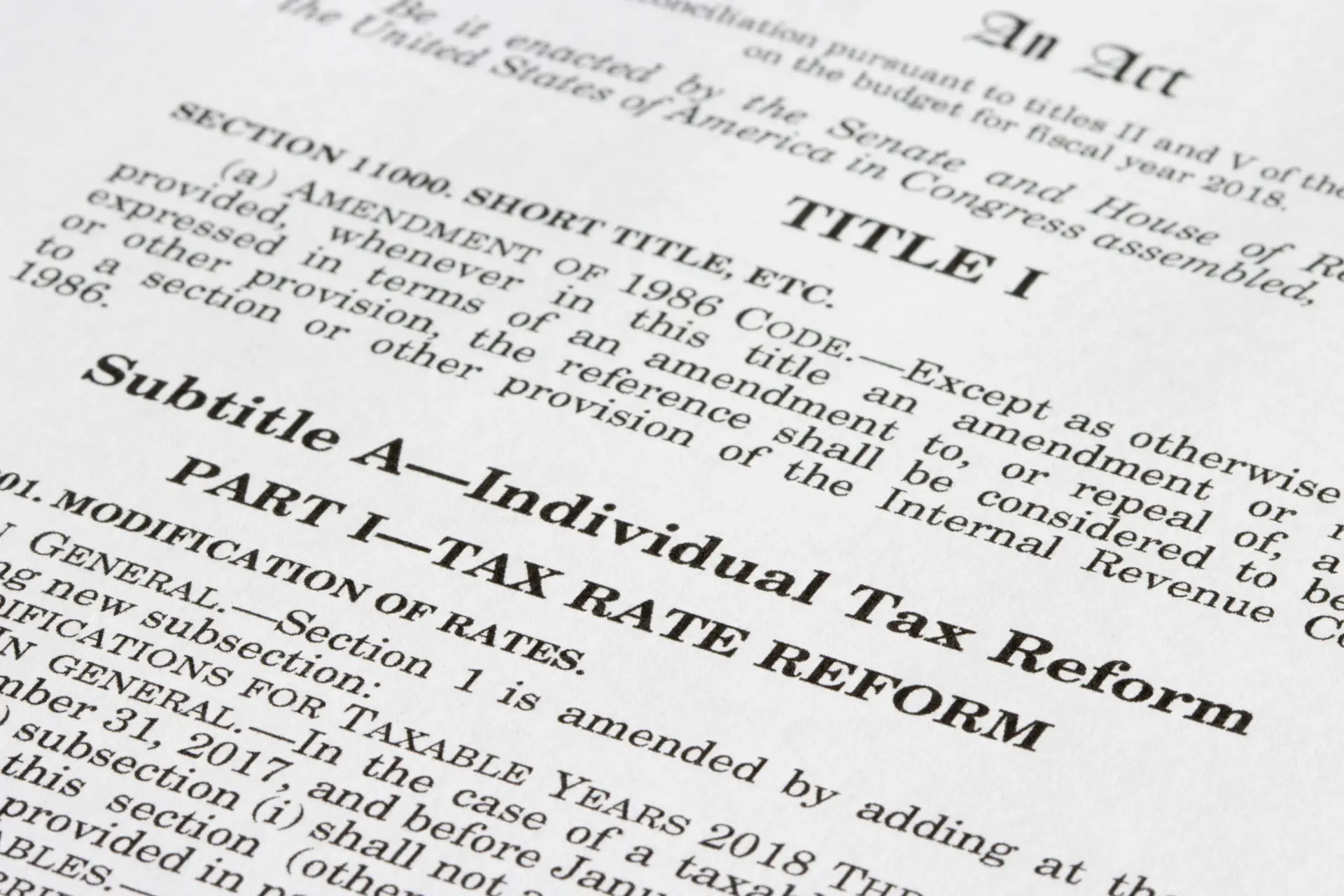
Close-up of printed document pages showing tax code sections and legal text about individual tax rates and amendments
News

Demystifying the 2025 Tax Debate: Impact on Estate and Gift Taxes

SimplyTrustSimplyTrust Editorial·April 9, 2025·Updated August 8, 2025·2 min read

What will the expiration of key TCJA provisions mean for estate taxes in 2025? Discover how this might impact your estate planning strategies.

What happens when key provisions from the Tax Cuts and Jobs Act (TCJA) are set to expire in 2025? Well, lawmakers have a unique opportunity for significant tax reform, and that’s something we should all pay attention to. The TCJA, which was passed in December 2017, brought significant changes to two major categories of taxes: income taxes and estate taxes. With these changes set to expire on December 31, 2025, the future is uncertain.

The TCJA doubled the estate tax exemption, boosting it significantly. In 2017, single filers had an exemption of $5.5 million and married couples $11.1 million. However, the TCJA raised this to $11.4 million for single filers and a whopping $22.8 million for married couples in 2018. But here’s the kicker: this doubled exemption will expire after 2025.

Proponents of the TCJA believed that by doubling the estate tax thresholds, it would encourage Americans to save more and have a positive effect on small farms and businesses. Critics, however, argue that this expanded exemption allows wealthy families to sidestep taxes on unrealized capital gains.

Interestingly, estate tax collections make up a small fraction of the federal revenues, amounting to less than 1%. The Tax Policy Center estimates that just over 7,000 returns will pay estate taxes in 2024, nearly tripling to around 19,000 returns when thresholds drop after 2025.

With the looming expiration of several TCJA individual tax provisions, it’s crucial for Congress members to carefully assess the impact of extending, ending, or modifying them. So, as we inch closer to the end of 2025, keep an eye on how these shifts could potentially affect your estate planning strategies.

Source: bipartisanpolicy.org

#TCJA#estate planning#estate tax#gift tax#tax law