Tony Hsieh's $500M Estate: Nevada Planning Lessons

What Happened
Tony Hsieh, the former CEO of Zappos, died in November 2020 at age 46 from smoke inhalation injuries sustained in a Connecticut house fire. He left behind an estimated $500 million estate, was unmarried, and had no children. Because no will surfaced immediately after his death, his estate proceeded under Nevada's intestacy rules, which directed assets toward his parents. His father and brother received appointments as estate administrators.
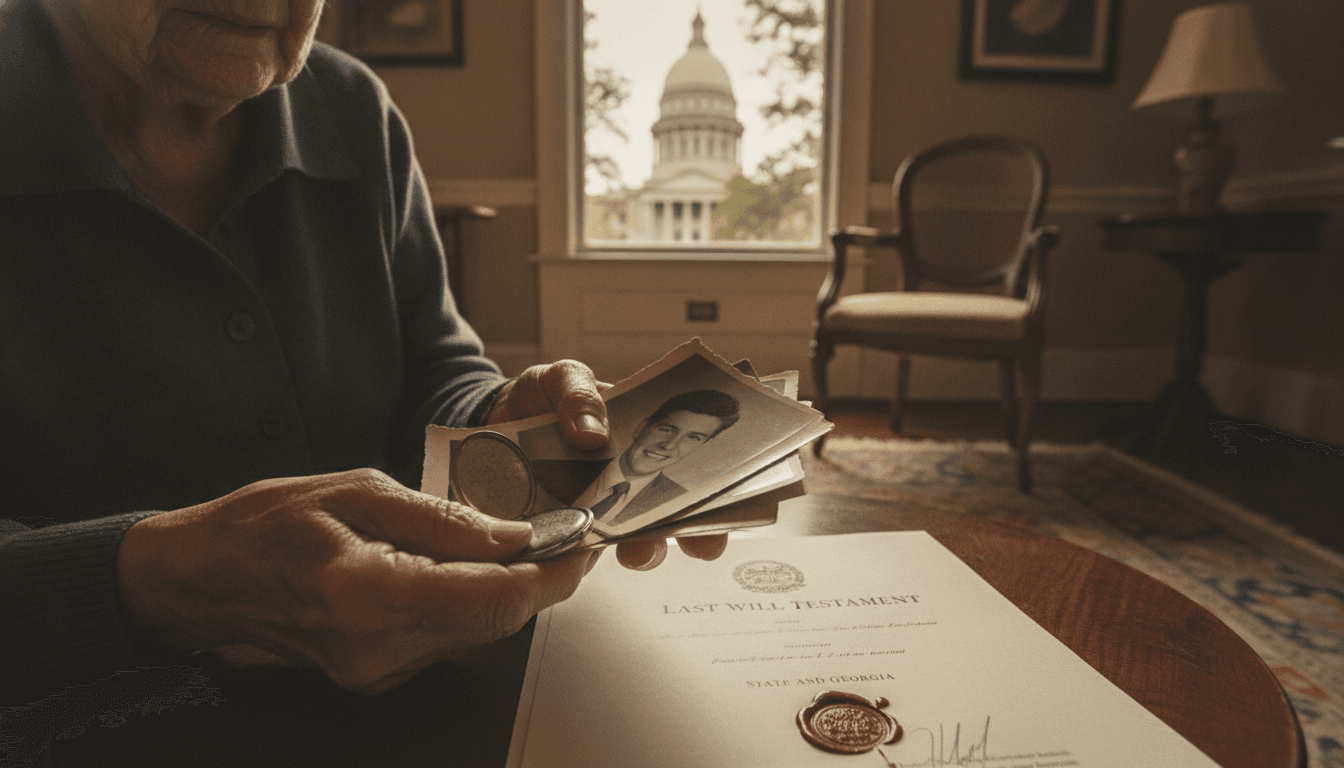
For several years, the estate moved forward under the assumption that no will existed. Then, in 2025, a priority mail envelope arrived at a Nevada law firm containing a seven-page document dated March 13, 2015, purporting to be Hsieh's last will and testament. The document directed gifts to the Red Cross, the Gates Foundation, and Harvard, and allocated $50 million along with real estate proceeds to an entity called the Tony Hsieh Lit Wow Irrevocable Trust — a trust with no confirmed record of existence. A letter accompanying the document stated it was found among the belongings of a 91-year-old man in Pakistan who had died with Alzheimer's disease. The man's grandson mailed the envelope and has not been heard from since.
Hsieh's family challenged the document, alleging it is not genuine. A handwriting expert found the signature was not authentic. A linguistics professor identified language patterns consistent with South Asian English. Witnesses listed on the document have not been located, and residential addresses for some witnesses produced no confirming records. Despite these challenges, the Nevada probate court determined the document cleared the threshold for serious consideration, calling it "just odd" but noting that oddness alone does not make a will rejected. As of July 2026, the matter proceeds toward a full will contest, with litigation that could continue for years and generate substantial legal fees paid from the estate itself.
What It Means
The Hsieh case illustrates what happens when someone dies without a clear, verifiable estate plan in a state like Nevada. Because Hsieh was unmarried and had no children, Nevada's intestacy rules directed his estate toward his parents. Nevada is a community property state, and its intestacy framework distributes assets through a fixed hierarchy based on family relationships — not personal wishes. Nevada's community property classification shapes how assets divide at death, and the intestacy formula applies rigid rules that no informal note or verbal promise can override. The absence of a signed, witnessed, and verifiable estate plan left the door open for a disputed document to emerge years later and destabilize an administration that had already been underway for years.
Nevada's will execution requirements demand that a will be signed by the testator and witnessed by 2NRS 133.040Verified Oct 19, 2026View source witnesses. Nevada also recognizes handwritten wills, though these carry their own verification challenges. The mystery will in the Hsieh case reportedly contained four witness signatures — more than the statutory minimum — yet none of those witnesses have been located or verified. That detail underscores a critical point: meeting the minimum formal requirements on paper is not the same as producing a document that reflects a person's genuine intentions. A self-proving affidavit, which Nevada law makes available, allows witnesses to attest to proper execution before a notary at the time of signing, creating a contemporaneous record that strengthens a will's credibility in court. The Hsieh document lacked that protection. Nevada also does not require notarization for a standard will, which means the only authentication mechanism is witness testimony — testimony that, in this case, cannot be obtained.
The estate's complexity also highlights Nevada's probate process and its costs. Nevada probate attorney fees follow a statutory schedule: 4%NRS 150.060 (reasonable compensation; if computed on the value of the estate the court allows 4% on first $100K, 3% next $100K, 2% next $800K, 1% next $9M, 0.5% next $15M — hourly billing also permitted, fee fixed by written agreement and approved by the court)Verified Sep 8, 2026View source on the first $100,000 of estate value, declining to 1%NRS 150.060 (reasonable compensation; if computed on the value of the estate the court allows 4% on first $100K, 3% next $100K, 2% next $800K, 1% next $9M, 0.5% next $15M — hourly billing also permitted, fee fixed by written agreement and approved by the court)Verified Sep 8, 2026View source on amounts between $1 million and $10 million. On a $500 million estate, statutory attorney fees alone would reach into the millions before accounting for the additional legal costs generated by a will contest. The creditor claim period in Nevada runs 3 monthsNRS 147.040Verified Sep 8, 2026View source, and the typical probate duration runs 6 months to 9 months for straightforward estates. Contested estates involving disputed wills extend far beyond that range. The Hsieh estate, already years into administration, faces an indeterminate additional timeline. Families watching this case from the outside see, in real time, what contested probate looks like: frozen decisions, escalating fees, and outcomes no one planned for. For more on what probate actually costs and how Nevada's process works, the overview of probate and its mechanics provides useful context, and the reasons families choose to bypass probate explains why so many Nevadans structure their estates to avoid it entirely.
Context from SimplyTrust
The Hsieh case demonstrates what an estate looks like when planning is absent, informal, or unverifiable. A properly funded revocable living trust — signed, documented, and titled correctly — removes most of the vulnerabilities the Hsieh estate exposed. Assets held in a trust avoid probate entirely, meaning no court proceeding is required to transfer them, no public record is created, and no window opens for a disputed document to surface years later and redirect the estate. Nevada also recognizes transfer-on-death deeds for real property, which provide an additional probate-avoidance tool for real estate outside of a trust structure. Nevada imposes no state estate or inheritance tax, meaning Nevada families keep more of what they pass on compared to the 12 states that levy their own estate taxes. The federal estate tax exemption currently stands at $15,000,00026 USC 2001(c), 2010; P.L. 119-21 §70106Verified Sep 15, 2026View source per individual, a threshold that affects very few estates but one that a $500 million estate would have far exceeded.
For Nevada families who want to understand what a clear, documented plan looks like in contrast to the Hsieh situation, the guide to avoiding probate with a trust explains how trust funding works and why it matters. The consequences of dying without an estate plan walks through what intestacy and contested estates mean for families in practical terms. The Hsieh case is extreme in its dollar amounts and its circumstances, but the underlying planning gaps — no verified will, no funded trust, no named fiduciaries with clear authority — appear in estates of every size. A plan that is signed, witnessed, stored securely, and known to the right people removes the conditions that allowed a disputed document to upend years of estate administration.
Source: Estate Planning Lessons From Tony Hsieh's $500M Mystery Will | Moonan | Stratton