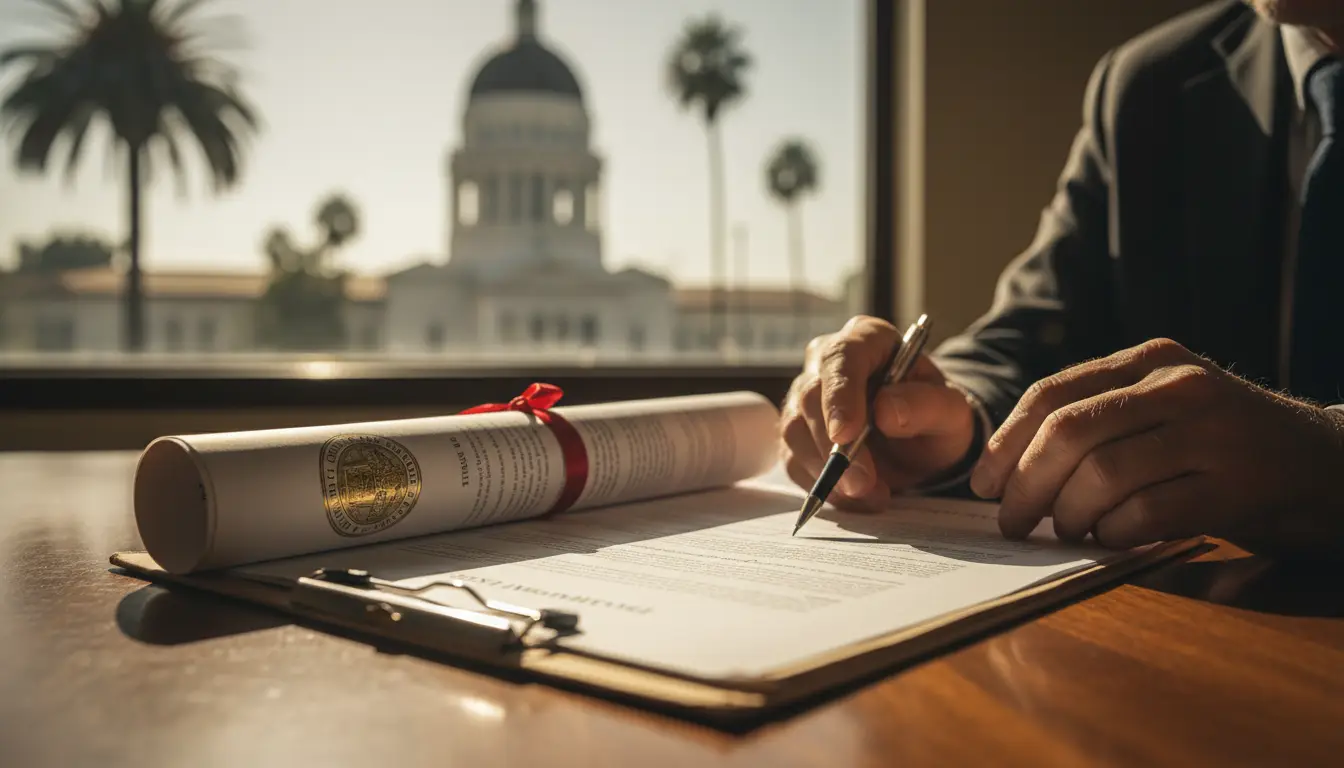
Person signing a legal document at a desk with a rolled certificate and capitol building visible through the window

Navigating Trust Disputes in California Probate Court

SimplyTrustSimplyTrust Editorial···2 min read

Discover how trust disputes escalate into probate court in California.

Have you ever wondered what happens when family members disagree over a trust? In California, these disputes can escalate quickly from a simple conversation to a complicated legal battle in probate court. Understanding the inner workings of this process is crucial for anyone involved in estate planning.

Trust disputes often arise when beneficiaries feel overlooked or when changes to a trust seem suspicious. For instance, if a family member suddenly alters beneficiary designations, others may question whether the change reflects the true intentions of the deceased. When discussions fail, the California Superior Court’s Probate Division steps in, providing a structured environment to resolve these disputes. It’s essential to note that the court has exclusive jurisdiction over trust-related issues, as outlined in Probate Code §17000.

Navigating probate litigation involves strict timelines and a plethora of documentation. For instance, if a petition is filed, there are deadlines for responses and the submission of evidence that must be adhered to. Engaging an attorney who specializes in probate and trust litigation can make a significant difference. Their expertise helps in managing the intricate details of the case while also ensuring that your rights are protected throughout the process.

It’s also worth highlighting that California’s probate courts require formal testimony and can involve complex legal arguments. Therefore, having knowledgeable legal counsel is not just beneficial; it’s often necessary to achieve a favorable outcome. If you’re facing a trust dispute, consider reaching out to an attorney with experience in estate litigation to guide you through this challenging terrain.

In summary, trust disputes can significantly impact family dynamics and the distribution of assets. Being aware of your rights and the legal framework governing these disputes can empower you to take informed actions. If you find yourself in such a situation, don’t hesitate to seek professional advice and explore your options. The right guidance can turn a daunting process into a manageable one.

Read the original article →

California Estate Law GuideProbate costs, will requirements, trust rules, and intestate succession.

Forms for Settling an Estate

Free forms for settling an estate: the probate petition, small estate affidavit, notice to creditors, inventory, and closing forms.

Free

Petition for Probate and Letters

Open probate and ask the court to appoint you and issue Letters Testamentary or Letters of Administration.

Get Started
Free

Notice to Creditors

Notify estate creditors and start the claim period — the published notice plus mailed copies for known creditors.

Get Started
Free

Renunciation of Executor

Decline an appointment as executor named in a will — the writing filed with the court before anyone is appointed.

Get Started
Free

Affidavit of Heirship

Prepare the sworn statement of a deceased person's family history and heirs for recording in the county land records, with your state's recording instructions.

Get Started
Free

Small Estate Affidavit

Collect a small estate's property without probate — the sworn affidavit presented to banks and other holders, with a presentation letter for each.

Get Started
Free

Estate Inventory

Prepare the probate inventory of estate property — every asset at its date-of-death value, composed to your state's statute, with the state's filing or delivery instructions.

Get Started
Free

Estate Closing

Prepare the paperwork that closes the estate — the state's closing statement, petition for discharge, or final account, with the state's closing instructions and the optional federal forms.

Get Started
Free

Letter of Instruction

Prepare the letter a bank or insurer requests during estate settlement, addressed to its claims department.

Get Started

All forms

Tools for Settling an Estate

Free tools for settling an estate: whether probate is needed, executor and trustee pay, creditor deadlines, and inheritance taxes.

How Much Can an Executor Charge?

Calculate how much an executor can charge for administering an estate.

Use Calculator

Can I Self-File Probate?

Whether your state lets you open probate yourself, and what it costs with a lawyer and without one.

Check Now

How Do I Get Appointed as Executor?

See the court, petition, bond, and documents needed to be appointed and receive your Letters.

See the Steps

What Are the Creditor Claim Deadlines?

Find creditor claim deadlines, notice requirements, and payment priority order for your state.

Check Deadlines

What Happens When an Estate Is Insolvent?

See the order your state pays an insolvent estate's debts and which claims go unpaid.

Check the Payment Order

How Do I Open an Estate Account When Someone Dies?

Compare estate-account opening requirements bank by bank: channels, required documents, and steps.

See Bank Requirements

What Is the Estate's Personal Property Worth for Probate?

Estimate the fair market value of household items for probate and see how it affects fees.

Estimate Value

Hire a California Probate Attorney

Browse vetted California attorneys handling probate matters.

Browse firms

All tools