California Real Estate and Estate Planning: 10 Myths Debunked

What Happened
A California estate planning law firm published a detailed breakdown of the ten most common misconceptions California homeowners hold about real estate and estate planning. The piece, written for homeowners navigating California's complex property ownership landscape, addresses myths that range from the belief that a will avoids probate to the assumption that buying a home with a partner automatically creates inheritance rights. The article draws on the firm's direct client experience and reflects questions that California homeowners search for most frequently online.
The article highlights a persistent gap in the home-buying process: most buyers work with mortgage brokers and realtors who rarely connect them with an estate planning attorney before escrow closes. By the time a client thinks about how their name appears on the deed — a decision with major consequences for inheritance, capital gains exposure, and property tax reassessment — the moment to act has often passed. The firm argues that a brief conversation with an estate planning attorney before closing can prevent costly mistakes that take years and significant legal fees to unwind.
The piece also addresses California-specific issues including Proposition 19, Transfer on Death deeds, LLC ownership structures for rental properties, and the intersection of divorce proceedings with real estate title. Each myth receives a practical explanation of the underlying legal reality, followed by a description of how a coordinated estate plan addresses the issue. The article covers both primary residences and investment properties, making it relevant to a wide range of California property owners.
What It Means
For California homeowners, the stakes of getting estate planning wrong are unusually high. California does not use the Uniform Probate Code, and the state offers no informal probate track. Every estate that requires court administration goes through a formal hearing process. The typical California probate takes 12 months to 18 months and carries statutory attorney fees calculated as a percentage of the gross estate value — 4% on the first $100,000, 3% on the next $100,000, 2% on the next $800,000, and so on. On a $1.5 million home — not unusual in California — those fees add up quickly. Court filing fees start at $435Cal. Gov. Code §§ 70650(a), 70602.5, 70602.6Verified Sep 8, 2026View source, and that figure does not include appraisal costs, executor fees, or bond premiums.
California does offer summary procedures for smaller estates. Personal property under $208,850Cal. Prob. Code § 13100Verified Sep 8, 2026View source can transfer through an affidavit after 40 daysCal. Prob. Code § 13100Verified Sep 8, 2026View source. Real property under $69,625Cal. Prob. Code § 13100Verified Sep 8, 2026View source can use a separate affidavit procedure. A 2025 law change created a new petition process for primary residences valued under $750,000, but that procedure applies only to a decedent's primary residence in California and uses specific court forms. None of these thresholds reflect the median California home price, which means the vast majority of California homeowners need a funded trust — not just a will — to keep their property out of probate court. A will directs the court on how to distribute assets; it does not prevent the court from getting involved in the first place. For a deeper look at why probate matters, the What Is Probate? guide explains the full process and its costs in plain language.
The article's treatment of Proposition 19, joint tenancy, and Transfer on Death deeds reflects real complexity that California homeowners frequently underestimate. Proposition 19, which took effect in 2021, narrowed the parent-child property tax exclusion significantly. Whether a child can inherit a parent's low property tax assessment now depends on whether the property was the parent's primary residence, whether the child uses it as their primary residence, and whether the property's fair market value exceeds the assessed value by more than $1 million. The form of title — joint tenancy, tenancy in common, community property, or community property with right of survivorship — produces dramatically different outcomes for inheritance, capital gains treatment, and reassessment risk. California does recognize Transfer on Death deeds, but as the article notes, these instruments address only one property and leave incapacity planning, blended family concerns, and minor beneficiary issues entirely unresolved. California's community property rules add another layer: married couples own most property acquired during marriage equally, which affects both the step-up in basis calculation at death and the outcome of divorce proceedings. Understanding these intersections is essential before signing any deed. The SimplyTrust article on community property states provides useful background on how California's rules compare to other states.
Context from SimplyTrust
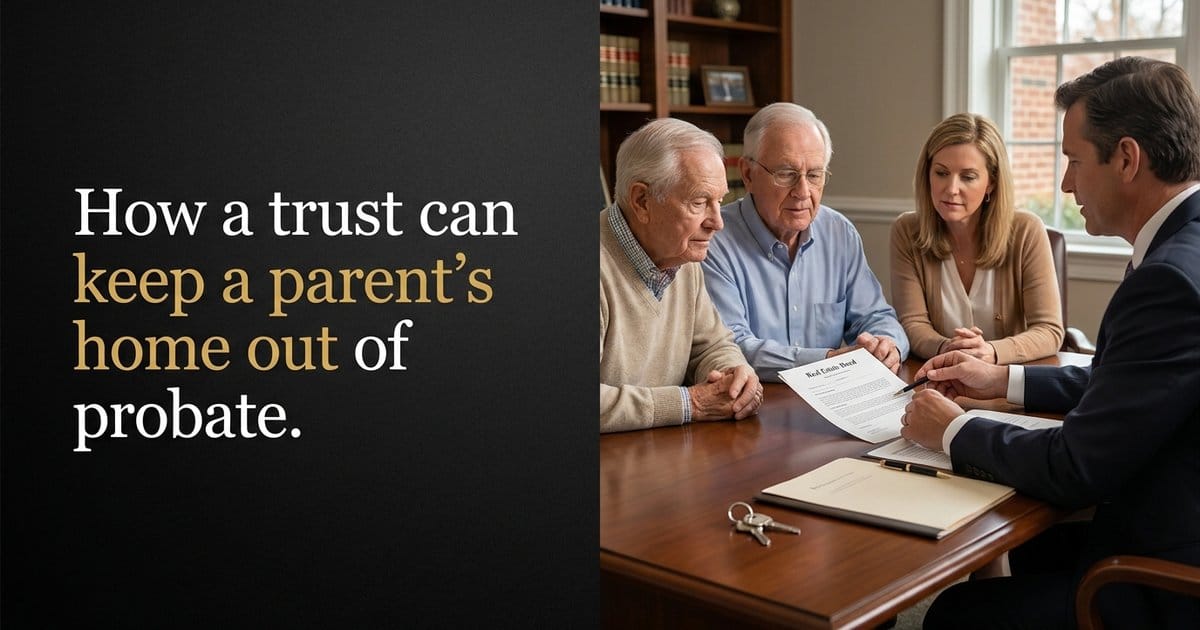
The core message running through all ten myths is the same: a funded revocable living trust, coordinated with the deed and beneficiary designations, resolves most of the problems California homeowners worry about. Transferring a home into a revocable trust generally does not trigger property tax reassessment in California. The transfer is also exempt from documentary transfer tax. The trust owner retains full control during their lifetime, can refinance or sell the property, and names a successor trustee who steps in without court involvement at death or incapacity. California requires executors to post a surety bond before letters testamentary are issued, though a will or trust can waive this requirement — one more cost and delay that a funded trust avoids entirely. For homeowners who want to understand exactly what goes into a trust and how real estate fits into the broader picture, the SimplyTrust guides on putting a house in a trust and avoiding probate with a trust walk through the mechanics in accessible detail. California imposes no state estate or inheritance tax, so for most California families, the primary estate planning goal is probate avoidance and incapacity planning — exactly what a revocable trust is designed to accomplish.
Homeowners dealing with rental properties, unmarried partners, blended families, or pending divorce face additional layers of complexity that a single document cannot resolve. The article correctly identifies that rental property ownership often involves a choice between direct trust ownership and a trust-owned LLC structure, with the right answer depending on liability exposure, financing terms, and insurance requirements. Estate plans that account for these variables protect families from discovering gaps at the worst possible time. SimplyTrust's estate inventory checklist helps homeowners document their full picture — real estate, financial accounts, business interests, and beneficiary designations — so nothing falls through the cracks. For those navigating the intersection of divorce and real estate title, the guide to revising estate plans after divorce covers the key steps and timing considerations that the source article also emphasizes.