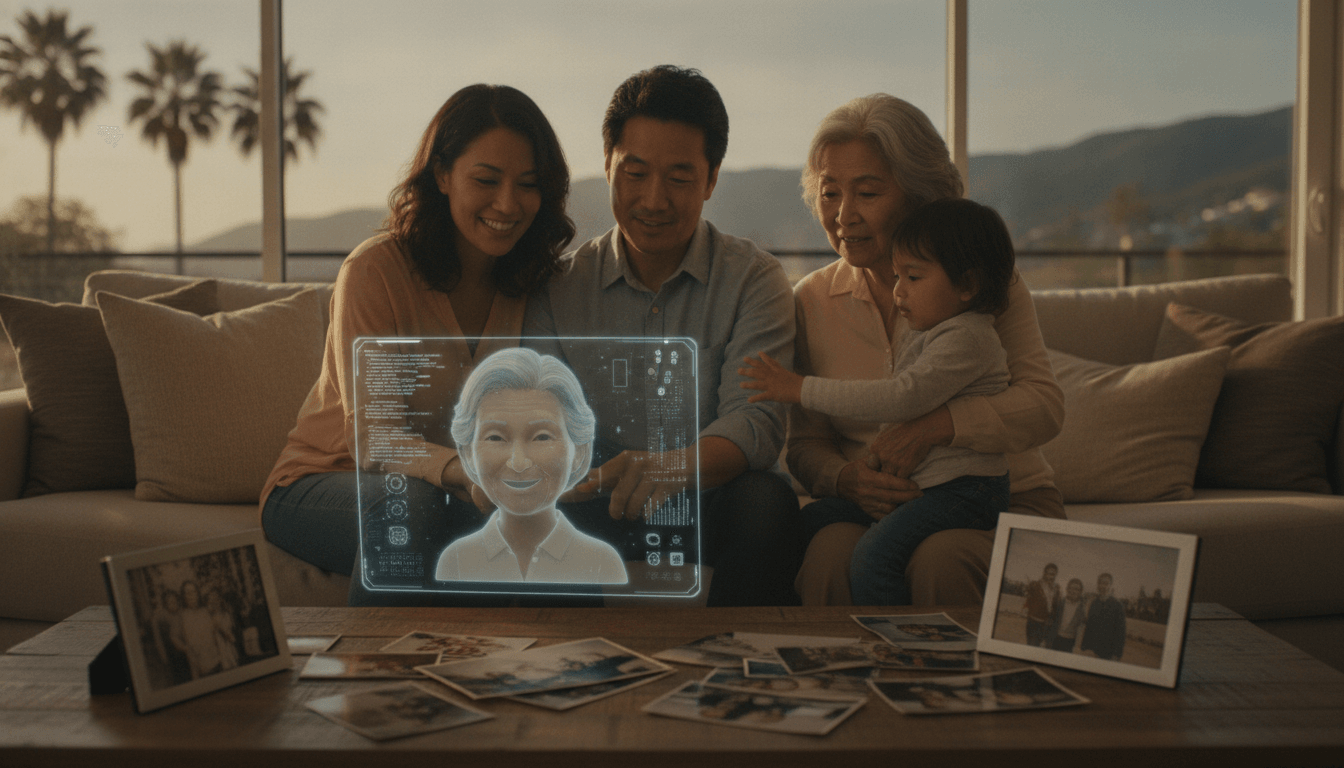
AI Digital Afterlife: What California Families Must Plan For

What Happened
A 2026 estate planning analysis from Moonan Stratton highlights a rapidly emerging legal challenge: artificial intelligence now makes it possible to recreate deceased people as digital personas, and the law has not caught up. The catalyst for the discussion is a new film, As Deep as the Grave, which features a posthumous AI-generated performance by actor Val Kilmer, who passed away in April 2026. His estate authorized the project, and filmmakers say it followed applicable AI guidelines. The result places a digital version of Kilmer on screen for over an hour, raising profound questions about consent, identity, and who controls a person's digital self after death.
The article draws a sharp contrast between Kilmer's authorized, commercially structured AI resurrection and a very different scenario: a woman who built a private chatbot replica of her deceased father, which she called "DadBot," by combining a public AI tool with voice modeling software. Unlike the film project, no estate authorization existed. No legal framework governed the creation. The father never expressed his wishes on the matter. The result was a deeply personal, privately constructed AI version of a real person, built from emails and recordings, without explicit consent.
The analysis identifies five specific traps families face in 2026, ranging from the loss of privacy after death to a landmark federal ruling, United States v. Heppner, which found that conversations with public AI tools like ChatGPT, Claude, or Gemini carry no attorney-client privilege and no reasonable expectation of confidentiality. Prompts and notes generated through these platforms can be subpoenaed and used in litigation to challenge an estate plan. The article argues that estate planning documents now need explicit directives governing AI persona replication, digital executor authority, and posthumous content rights.
What It Means
For California families, the stakes are particularly significant. California already recognizes postmortem publicity rights, allowing estates to control or license the use of a deceased person's name, image, and likeness for commercial purposes. Newer California law also requires explicit estate consent before an AI-generated replica of a deceased performer appears commercially. These protections, however, apply primarily to public figures and commercial contexts. A family member privately building an AI version of a parent from saved text messages and voicemails sits in a legal gray zone that current California statutes do not fully address.
The gap matters enormously when combined with California's probate realities. An estate that enters formal probate faces a process lasting 12 months to 18 months, with a court filing fee of $435Cal. Gov. Code §§ 70650(a), 70602.5, 70602.6Verified Sep 8, 2026View source and statutory attorney fees calculated as a percentage of gross estate value. The state also requires a surety bond before letters testamentary are issued, though a will provision or written waiver from all beneficiaries can eliminate that requirement. If family members disagree about whether to maintain, pause, or delete a deceased person's AI persona, and no designated digital executor exists, that dispute could land in probate court, adding cost and delay to an already difficult process. The article from Moonan Stratton identifies exactly this scenario as the "Inconsistent Heir" trap.
California's community property framework adds another layer of complexity. California is a community property state, meaning assets acquired during marriage generally belong equally to both spouses. Digital assets, including AI-generated content, recordings, and the data used to build posthumous personas, may involve shared ownership questions that standard estate documents do not anticipate. Families navigating this terrain benefit from explicit written directives in their trust or will that address synthetic media generation, posthumous AI persona creation, and the designation of a digital executor with clear authority. Understanding the role of digital assets in trusts and how to plan for them has never been more relevant. The Heppner ruling also carries direct implications for Californians who use public AI tools to draft or brainstorm estate planning decisions: those records carry no confidentiality protection and can be used in court to challenge testamentary intent.
California offers a transfer-on-death deed option for real property, giving families one additional tool to transfer assets outside probate. California's independent administration framework allows executors to handle many estate matters without repeated court approval, which can reduce delays when disputes do not arise. But neither mechanism addresses the emerging question of who controls a deceased person's AI-generated presence. That requires proactive language in the underlying documents themselves. Families with estates below $208,850Cal. Prob. Code § 13100Verified Sep 8, 2026View source in personal property may qualify for a simplified affidavit procedure, avoiding formal probate entirely. For real property valued under $69,625Cal. Prob. Code § 13100Verified Sep 8, 2026View source, a separate affidavit procedure covers non-primary-residence real property. These thresholds adjust every three years based on the consumer price index, with the next adjustment scheduled for April 1, 2028. Even families using these streamlined paths still face the same absence of legal guidance on digital personas, making explicit estate directives essential regardless of estate size.
The copyright dimension identified in the Moonan Stratton article deserves specific attention. Under current U.S. copyright guidance, work created solely by an AI system, even one trained on a deceased person's writing style or voice, may not qualify for copyright protection because no recognized human author exists. If an AI version of a deceased California resident "writes" a book or produces creative content after death, heirs may lose the associated royalties. The article recommends requiring any posthumous AI-generated content to involve documented human curation or editing, preserving the "human hand" necessary to support a copyright claim. This kind of forward-looking instruction belongs in the same estate documents that address asset distribution, trustee authority, and beneficiary designations. Exploring estate planning strategies for younger generations increasingly means addressing these digital identity questions alongside traditional financial planning. Families who want a broader foundation can also review the glossary of basic estate planning terms to understand how concepts like digital executor, trustee authority, and asset distribution apply to this new landscape.
Context from SimplyTrust
SimplyTrust's trust documents include legal provisions for digital assets under Schedule L, covering email accounts, social media profiles, cloud storage, photo libraries, messaging apps, and similar online accounts. The framework already addresses the digital trustee role, which carries independent authority to manage, close, or memorialize non-financial accounts, and coordinates with the primary trustee for assets that carry financial value. As AI-generated personas become a practical concern for more families, the distinction between a digital trustee's authority and a primary trustee's authority becomes increasingly important to define clearly. Families exploring how to address their full range of digital assets in an estate plan can use SimplyTrust's digital assets directory as a starting point for understanding what accounts and data may need explicit instructions.
The broader lesson from the Moonan Stratton analysis is that estate planning documents written even a few years ago almost certainly contain no guidance on AI personas, posthumous synthetic media, or digital executor authority over AI-generated content. Reviewing and updating those documents is a practical response to a legal landscape that continues to shift. SimplyTrust's revocable living trust structure allows for amendments at any time during the grantor's lifetime, making it possible to add directives on AI persona rights as this area of law develops. Families who want to understand how trusts handle these evolving issues can explore 30 reasons to update a trust for a comprehensive look at the life events and legal changes that warrant a document review.
Source: AI and the Digital Afterlife: A 2026 Estate Planning Primer | Moonan | Stratton