NC Probate Can Fix Improperly Notarized Vehicle Titles

What Happened
A recent legal analysis from Pierce Law Group clarifies when North Carolina probate paperwork can resolve vehicle title transfer issues involving improper notarization after an owner's death. The analysis addresses a common problem: when someone attempts to transfer a deceased person's vehicle using a title that was signed or notarized incorrectly, can estate documents from the probate court provide an alternative legal path for the transfer?
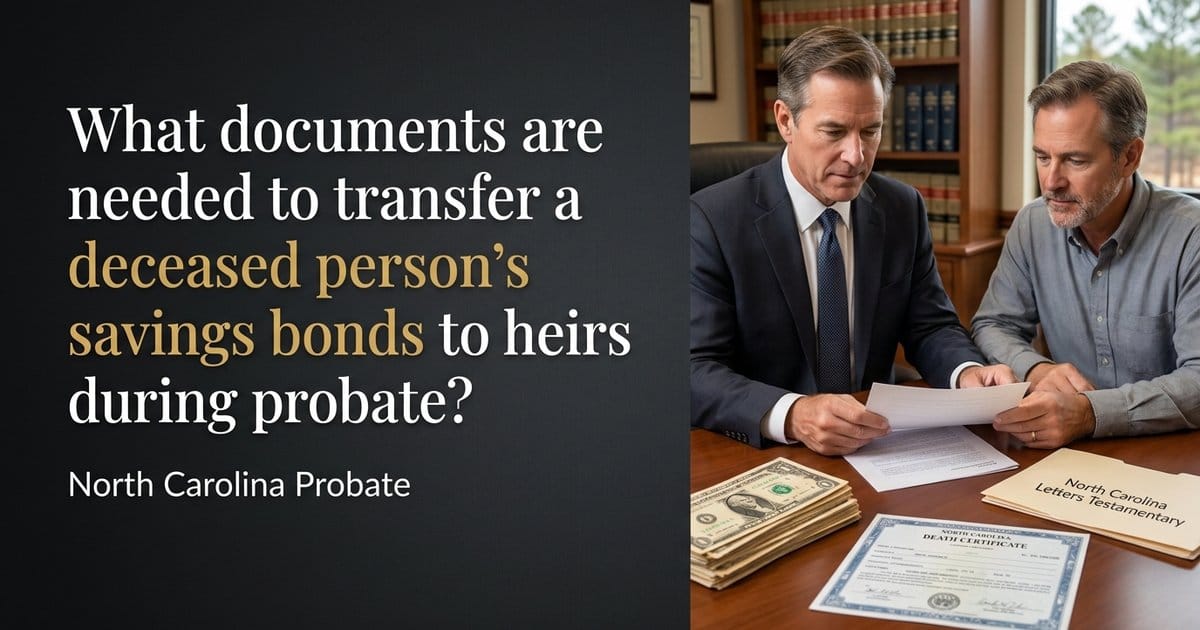
According to the legal guidance, probate documents cannot erase bad notarization or validate unauthorized signatures. However, certified estate documents can provide a separate legal basis for the North Carolina Division of Motor Vehicles to process vehicle transfers after death. The key factor is whether the person signing the title had proper authority when they signed it - such as a personal representative with Letters Testamentary, a surviving spouse with an allowance order, or an agent acting under a valid power of attorney before the owner's death.
The analysis explains that North Carolina treats death-related vehicle transfers differently from regular owner-to-owner sales. While ordinary transfers require proper execution of the title assignment, death-related transfers allow the NCDMV to accept certified probate documents including wills, Letters of Administration, or clerk's certificates assigning vehicles to surviving spouses. The estate documents must prove either that the signer had authority or that the vehicle passed by inheritance, devise, or spousal allowance.
What It Means
This guidance has significant implications for North Carolina families dealing with vehicle transfers after a loved one's death. When probate is required in North Carolina, estates with assets exceeding $20,000N.C.G.S. § 28A-25-1Verified Sep 8, 2026View source for personal property must go through formal probate proceedings. However, surviving spouses may use the small estate process for up to $30,000N.C.G.S. § 28A-25-1Verified Sep 8, 2026View source in personal property, which can include vehicles valued within this threshold.
The typical probate process in North Carolina takes 9 months to 12 months, during which time vehicle transfers often become necessary. Personal representatives must wait 30 daysN.C.G.S. § 28A-25-1Verified Sep 8, 2026View source after death before using small estate affidavits, and surviving spouses have specific deadlines for claiming their $60,000N.C.G.S. §§ 30-15, 30-17Verified Oct 11, 2026View source allowance, which can include vehicles. North Carolina requires surety bonds for personal representatives, though wills can waive this requirement.
The financial implications extend beyond simple title transfers. North Carolina probate involves court filing fees of $120 plus 0.4% of personal property, up to $6,120N.C.G.S. § 7A-307(a)(1), (1a), (2)Verified Oct 17, 2026View source, and attorney fees typically range from 2%Modeled estimate under N.C.G.S. § 28A-13-3(a)(19), § 28A-23-3(a) (attorney fees are a negotiated administration expense; no statutory schedule or percentage): the hours the statutory fee schedules imply, at the state's surveyed hourly rateVerified Sep 8, 2026View source to 3.1%Modeled estimate under N.C.G.S. § 28A-13-3(a)(19), § 28A-23-3(a) (attorney fees are a negotiated administration expense; no statutory schedule or percentage): the hours the statutory fee schedules imply, at the state's surveyed hourly rateVerified Sep 8, 2026View source of the estate value. When vehicle title issues arise during probate, families may face additional costs for duplicate titles, corrected assignments, or legal guidance to navigate NCDMV requirements. The 28-day deadline for new title applications adds urgency to resolving these issues promptly.
Context from SimplyTrust
Vehicle title complications highlight why comprehensive estate planning matters. A properly funded revocable living trust can hold vehicle titles, allowing for seamless transfer to beneficiaries without probate court involvement. SimplyTrust's probate cost calculator helps North Carolina families estimate the potential expenses of probate, including complications like vehicle title issues. For families facing these challenges, understanding what probate involves and exploring ways to avoid probate with a trust can prevent similar issues in the future.
Source: Can probate paperwork fix a vehicle transfer that was done with an improperly notarized title? NC