$124 Trillion Wealth Transfer Reshapes Estate Planning

What Happened
A new report from Haute Jets and 5W Public Relations documents the largest private wealth transfer in history, with $15,000,00026 USC 2001(c), 2010; P.L. 119-21 §70106Verified Sep 15, 2026View source trillion projected to change hands by 2048 according to Cerulli Associates. The study reveals that more than 70% of heirs drop their parents' financial advisor after inheriting, with only about one in five maintaining the relationship that helped build the family fortune.
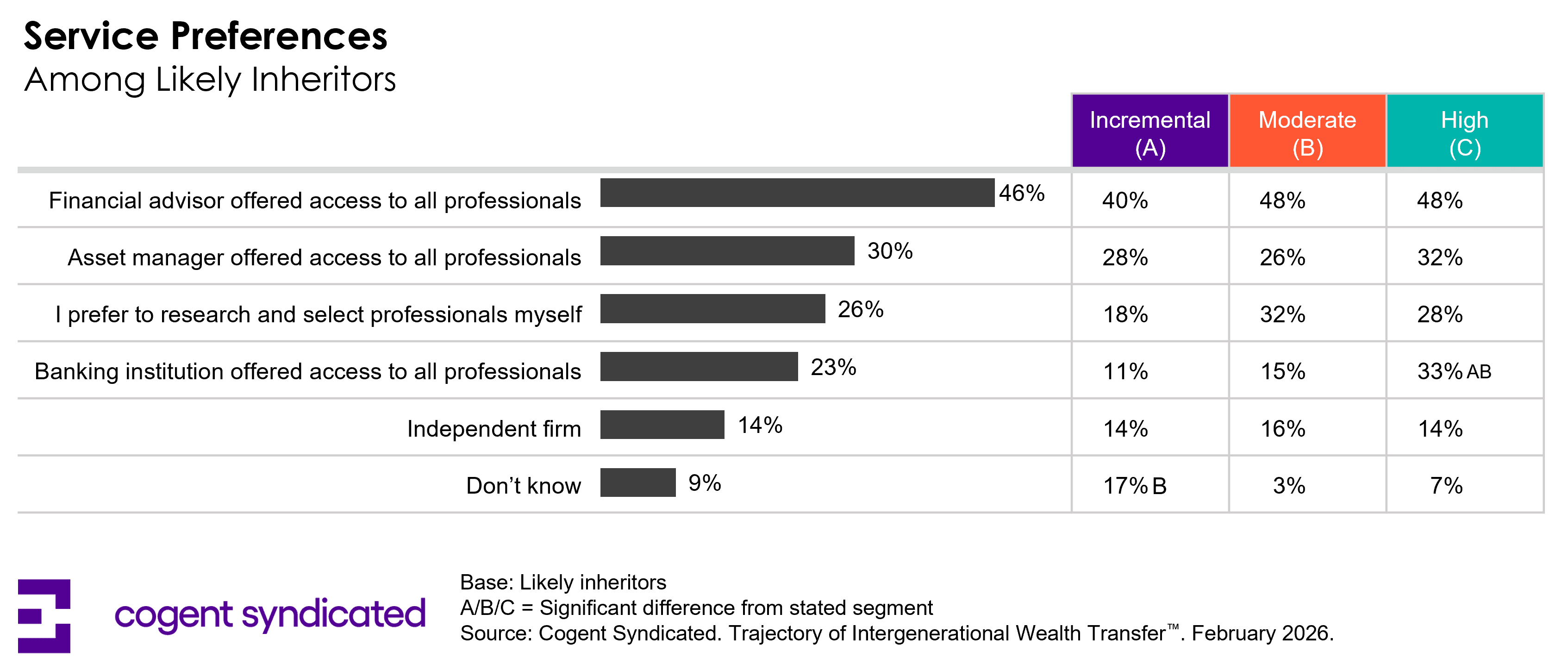
The research highlights a fundamental shift in how the next generation discovers and selects financial services. Unlike previous generations who relied on referrals or traditional marketing, today's heirs conduct research through AI platforms like ChatGPT, Claude, and Perplexity before making any human contact. This discovery pattern applies not just to financial advisors but to every service relationship connected to family wealth, including banks, law firms, and estate planning professionals.
The geographic redistribution of wealth shows dramatic patterns, with Shenzhen's millionaire population growing 142% over the past decade, while the United Kingdom lost 16,500 millionaires in 2025 alone. Within the United States, Florida captured $20.7 billion in net adjusted-gross-income from interstate migration, nearly four times the gain of second-place Texas. The report also identifies 241,700 crypto millionaires worldwide, 94% under age 40, clustering in tax-favorable jurisdictions like Dubai, Singapore, and Puerto Rico.
What It Means
This massive wealth transfer creates unprecedented challenges for estate planning continuity. When 70% of heirs change advisors, families risk losing institutional knowledge about complex trust structures, tax strategies, and succession plans that took decades to develop. The Great Wealth Transfer represents more than asset movement—it signals a complete restructuring of professional relationships that support family wealth.
The shift toward AI-driven discovery fundamentally changes how estate planning professionals must position themselves. Traditional referral networks and relationship-based business development may prove insufficient when heirs research options through large language models before any human interaction. Estate planners who lack strong digital presence and searchable expertise risk exclusion from consideration lists generated by AI platforms.
Geographic wealth migration patterns reveal changing preferences for estate planning jurisdictions. States like Florida benefit not only from favorable tax policies but also from modern estate planning infrastructure that appeals to younger wealth holders. The concentration of crypto millionaires in specific jurisdictions suggests this generation prioritizes tax efficiency and regulatory clarity over traditional family ties to particular locations. Estate plans created in one state may require significant restructuring as families relocate to capture tax advantages or lifestyle preferences.
The research indicates that inherited wealth increasingly favors asset-light strategies over traditional ownership models. This preference affects how trusts should be structured, particularly regarding illiquid assets like real estate or business interests. Trust structures may need greater flexibility to accommodate beneficiaries who prefer access over ownership, requiring innovative approaches to distribution planning and asset management.
Professional service relationships that survived multiple generations face unprecedented vulnerability during this transfer period. Estate planning documents that name specific advisors or service providers may become obsolete if beneficiaries systematically replace inherited professional relationships. This creates urgency for updating estate plans to focus on outcomes rather than specific provider relationships, ensuring continuity of intent even when implementation teams change.
The speed of this transition challenges traditional estate planning timelines. Previous wealth transfers often occurred gradually, allowing relationships to evolve naturally. The current generation's preference for rapid decision-making through digital research compresses relationship-building timeframes, requiring estate planners to demonstrate value quickly and transparently. Families who delay estate planning risk creating additional complications when transfers occur without proper preparation.
Context from SimplyTrust
The research findings underscore the importance of accessible, technology-enabled estate planning tools that can adapt to changing family dynamics and geographic mobility. Modern estate planning platforms must accommodate the next generation's preference for digital-first interactions while maintaining the legal precision required for complex wealth transfers. Understanding the differences between trusts and wills becomes particularly important when beneficiaries may relocate to different jurisdictions with varying legal requirements.
Estate planning documents created today should anticipate the mobility and service provider preferences revealed in this research. Rather than binding families to specific advisors or geographic locations, well-designed trusts can provide flexibility for beneficiaries to work with professionals who meet their evolving needs while preserving the family's overall wealth management strategy. Revocable trust structures offer particular advantages during major wealth transfers, allowing adjustment before the grantor's death while providing stability afterward.