Average Inheritances Double to $1 Million as Wealth Transfer Accelerates

What Happened
A new study from Escalent's Cogent Syndicated research division reveals that the average anticipated inheritance will nearly double from $500,000 to $1 million over the next decade. The research, conducted between October 2024 and January 2025, surveyed 4,932 affluent investors with at least $100,000 in investable assets to understand how the growing complexity of inherited wealth affects planning decisions.
The study identifies "High Impact" inheritors as those whose inheritances will exceed half of their current net worth. This group, representing nearly half of all affluent investors, expects to inherit an average of $750,000. These inheritors face significantly more complex asset transfers than previous generations, including workplace retirement plans, company equity, annuities, and family heirlooms passed through various legal mechanisms beyond simple wills.
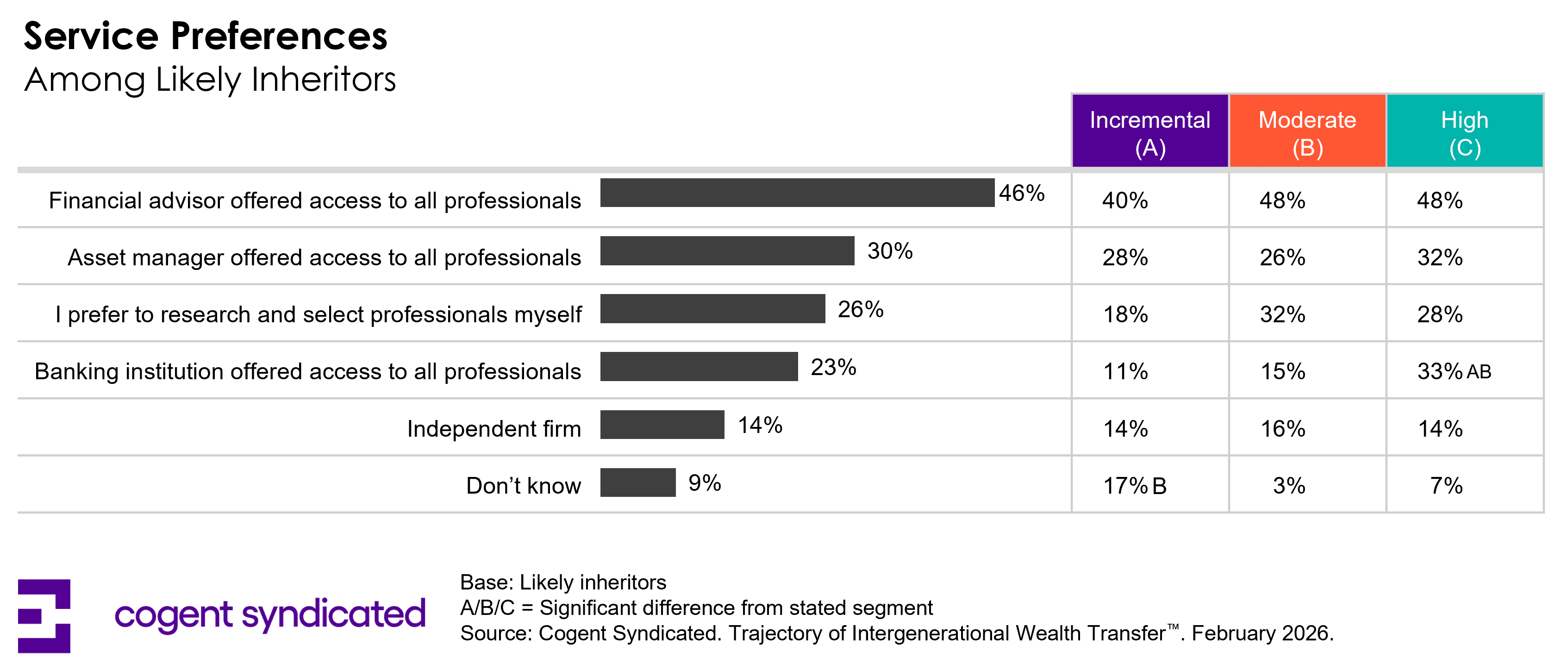
The research shows that 58% of High Impact inheritors plan to use financial advisors to manage their inheritances, with many also engaging attorneys, insurance professionals, and trust services. However, these inheritors increasingly prefer centralized services, with 48% wanting to access multiple professionals through their financial advisor, 33% through their banking institution, and 32% through their asset manager, moving away from fragmented specialist teams.
What It Means
The doubling of average inheritance amounts reflects the massive intergenerational wealth transfer currently underway, often called the Great Wealth Transfer. As Baby Boomers pass assets to younger generations, families face estate planning challenges that extend far beyond traditional wills and simple asset transfers. The complexity stems from modern investment portfolios that include employer stock options, multiple retirement accounts, and alternative investments that require specialized knowledge to transfer efficiently.
The shift toward complex assets has significant implications for estate planning strategies. When inheritances include workplace retirement plans with specific rollover requirements, company equity with vesting schedules, or annuities with beneficiary restrictions, families need comprehensive planning that coordinates multiple legal and financial instruments. The $15,000,00026 USC 2001(c), 2010; P.L. 119-21 §70106Verified Sep 15, 2026View source federal estate tax exemption means most inheritances avoid federal estate taxes, but state-level considerations and income tax implications on inherited retirement accounts create additional complexity.
The preference for centralized wealth planning services reflects the emotional and logistical burden inheritors face during already difficult times. Rather than coordinating separate relationships with attorneys, financial advisors, insurance agents, and trust officers, families increasingly want integrated teams that can handle multiple aspects of wealth transfer. This trend suggests that estate plans work most effectively when they anticipate not just tax efficiency, but also the practical challenges beneficiaries will face when inheriting complex asset portfolios.
Context from SimplyTrust
The research findings align with SimplyTrust's approach to comprehensive estate planning that addresses both simple and complex asset transfers. The platform's trust-based planning helps families organize multiple asset types within a single legal framework, reducing the coordination burden on inheritors while maintaining the flexibility needed for complex distributions. When families use tools like the probate calculator to understand potential court costs and delays, they often discover that trust-based planning provides both cost savings and administrative simplification for their beneficiaries.
For families anticipating significant wealth transfers, understanding the difference between various planning approaches becomes crucial. The trust vs. will comparison helps families evaluate which approach best serves their specific situation, while resources on the Great Wealth Transfer provide broader context on the generational shift currently underway. As the study suggests, the most effective estate plans anticipate not just tax consequences, but also the practical challenges inheritors face when managing complex asset portfolios.
Source: Demand for Centralized Wealth Planning Services Accelerates as Inherited Assets Grow in Complexity