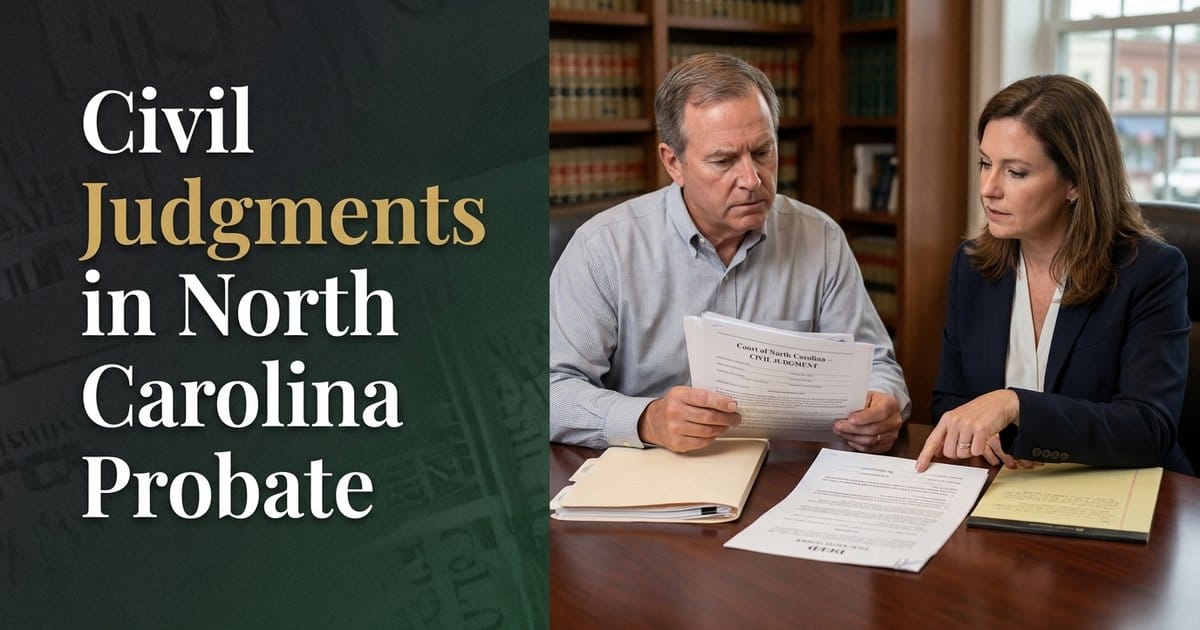
When someone passes away, gathering financial account statements becomes one of the most critical tasks for executors and family members. This process requires careful organization and understanding of specific requirements for estate administration.
Why Is Gathering Financial Account Statements After Someone Passes Away Necessary?
Financial account statements serve multiple essential purposes in estate administration. They provide a complete picture of the deceased person's assets, help determine whether probate is necessary, and ensure proper distribution to beneficiaries.
In Connecticut, for example, gathering financial account statements helps determine if an estate qualifies for the simplified Small Estate Affidavit (Affidavit in Lieu of Probate of Will/Administration, PC-212)C.G.S. § 45a-273Verified Sep 8, 2026View source process when personal property totals less than $40,000C.G.S. § 45a-273Verified Sep 8, 2026View source. Estates exceeding this threshold typically require full probate proceedings.
What Financial Documents Should You Collect?
Start by gathering statements from all financial institutions where the deceased held accounts. Bank statements from checking and savings accounts provide immediate insight into liquid assets. Investment account statements from brokerage firms, mutual fund companies, and retirement plan administrators reveal additional wealth.
Credit card statements and loan documents expose debts that must be addressed during estate administration. Life insurance policies and annuity contracts often represent significant assets that pass directly to named beneficiaries outside of probate.
Property deeds, vehicle titles, and business ownership documents complete the asset picture. These physical assets may require appraisal and transfer through probate court proceedings.
How Do You Request Account Statements from Financial Institutions?
Most financial institutions require specific documentation before releasing account information. Present a certified copy of the death certificate along with proof of your authority to act on behalf of the estate.
If you serve as the named executor, provide a copy of the will and your appointment papers from probate court. Family members without formal appointment may face restrictions on accessing detailed account information.
Contact each institution directly to understand their specific requirements. Some banks provide account balances over the phone, while others require written requests with notarized signatures.
How Do Account Statements Affect Probate Costs?
Connecticut probate court filing fees range from $150 - $40,000 (graduated by the estate value)Conn. Gen. Stat. § 45a-107(b)Verified Sep 8, 2026View source, calculated based on total estate value. Accurate account statements ensure proper fee calculation and prevent court delays.
Attorney fees in Connecticut follow reasonable compensationCT Probate Court Rules of Procedure, Rule 39 (reasonable compensation; no statutory percentage; Hayward v. Plant factors). Note: C.G.S. § 45a-294 covers will contest expenses only and is not the fee authority.Verified Sep 8, 2026View source standards, typically ranging from 2.2%CT Probate Court Rules of Procedure, Rule 39 (reasonable compensation; no statutory percentage; Hayward v. Plant factors). Note: C.G.S. § 45a-294 covers will contest expenses only and is not the fee authority.Verified Sep 8, 2026View source to 3.5%CT Probate Court Rules of Procedure, Rule 39 (reasonable compensation; no statutory percentage; Hayward v. Plant factors). Note: C.G.S. § 45a-294 covers will contest expenses only and is not the fee authority.Verified Sep 8, 2026View source of the estate value. Complete financial documentation helps attorneys provide accurate fee estimates.
Connecticut requires surety bonds for executors, though the will can waive this requirement. Bond premiums typically cost 0.5%C.G.S. § 45a-289 (bond required); § 45a-169 and § 45a-139 (waiver); Conn. Probate Court Rules § 35.6 (amount = assets under the fiduciary's control, reducible by unsaleable real property and restricted-account assets), § 35.1(b)(3)(B) (waiver on written waiver by every heir or beneficiary), § 35.3(a) (corporate surety required)Verified Sep 8, 2026View source of the estate value annually.
What Challenges Might You Encounter?
Some financial institutions prove more cooperative than others when releasing account information. Online-only banks may lack local representatives, requiring written correspondence that extends the timeline.
Deceased individuals sometimes maintain accounts at multiple institutions without informing family members. Check mail carefully for statements from unfamiliar financial companies.
Joint accounts with right of survivorship pass directly to the surviving account holder outside of probate. However, these accounts still require documentation for tax purposes and estate planning.
How Can Estate Planning Tools Help?
Proper estate planning simplifies the process of gathering financial account statements after death. A comprehensive revocable living trust consolidates assets under trust ownership, reducing the number of individual accounts requiring probate administration.
The Estate Ledger provides tamper-proof documentation of trust assets and changes over time. This creates an organized record that eliminates guesswork for surviving family members.
Modern estate planning platforms like SimplyTrust help individuals organize their financial information while alive, making the process of gathering account statements much simpler for their survivors.
What Steps Should You Take Next?
Begin gathering financial account statements immediately after obtaining certified death certificates. Create a comprehensive list of all known financial institutions and contact each one directly.
Organize statements chronologically and by institution type. This organization proves invaluable when preparing probate court filings and tax returns.
Consider consulting with a Connecticut probate attorney if the estate appears complex or if you encounter difficulties accessing account information. Professional guidance can prevent costly mistakes and ensure compliance with state requirements.
Sources
Connecticut Statutes (§ 45a-437, § 45a-438, § 45a-437, § 45a-438, § 45a-440)